
To stop a hot flash fast without hormones, your quickest path is to combine an immediate cooling action with slow paced breathing the moment a flash begins. Sip ice water, remove a clothing layer or turn on a fan, and breathe in slowly for five counts then out for five counts until the intensity drops. Most hot flashes last between one and ten minutes, so the goal is not to eliminate the sensation instantly but to move through it with less discomfort. Beyond that in-the-moment response, reducing how often flashes happen requires a short daily practice: logging your triggers, adjusting your sleep environment, and building consistent habits around breathwork and movement. This guide walks you through both the fast response and the longer plan, entirely without hormone therapy.
This is for you if:
- You are experiencing hot flashes related to menopause, perimenopause, or a cancer treatment that has changed your hormone levels.
- You cannot use hormone therapy or prefer not to, and you want practical non-hormonal strategies that are backed by clinical guidance.
- You want to know what to do right now, in the middle of a flash, not just general lifestyle advice.
- You are open to tracking your symptoms and triggers for a few weeks to find what is driving your flashes.
- You are considering herbal supplements or integrative therapies and want to understand the safety boundaries before you try them.
- You have access to a healthcare provider to discuss nonhormonal medications if lifestyle changes are not enough on their own.
What You Need Before You Start
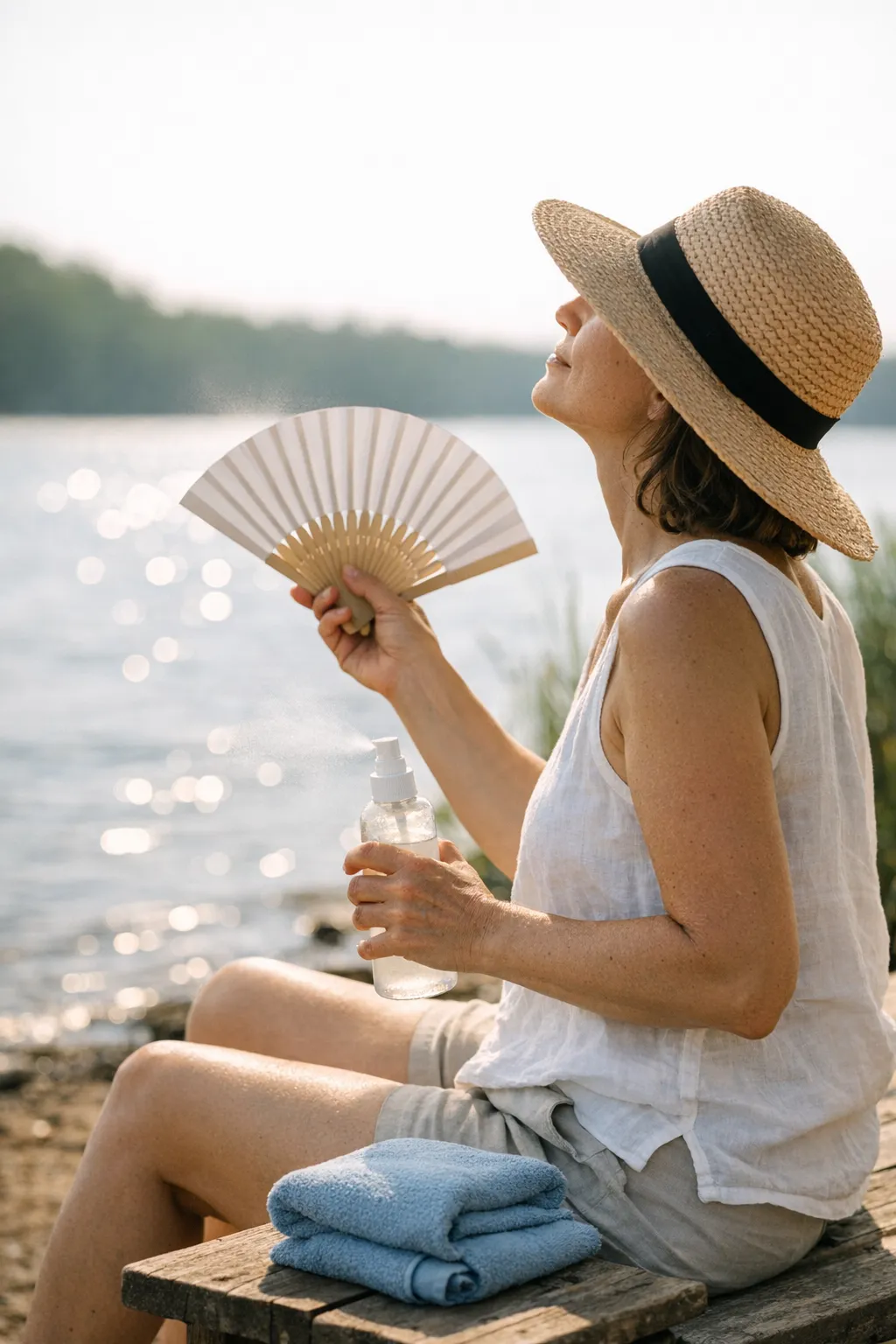
Having the right items and information in place before a hot flash hits means you can respond quickly instead of scrambling. Most of these are things you likely already own or can arrange in a few minutes. Getting your environment and habits set up in advance is what separates a plan that actually works from one that only sounds good on paper. If night-time symptoms are already affecting your rest, reviewing how menopause affects sleep can help you understand what you are working against before you begin.
Before you start, make sure you have:
- A small notebook, journal, or phone app you can use consistently to log when hot flashes happen, how long they last, and what preceded them.
- A refillable water bottle or large glass you can keep filled with ice water throughout the day and within reach at night.
- At least one fan, whether a handheld battery-powered fan, a desktop fan, or a ceiling fan you can switch on quickly.
- Loose, breathable clothing made from cotton or linen that you can layer and remove easily when a flash starts.
- Cotton or linen bed sheets and lightweight cotton sleepwear for your sleep environment.
- The ability to lower your thermostat or open a window in your bedroom before sleep.
- A basic awareness of your current triggers, including caffeine, alcohol, spicy food, stress, hot drinks, smoking, and heat exposure.
- A willingness to practice slow paced breathing (five counts in, five counts out) daily, not just during a flash.
- Knowledge of your current medications and supplements so you can flag potential interactions before adding anything new.
- Access to a healthcare provider you can contact if hot flashes are severe, worsening, or accompanied by unusual symptoms.
- Realistic expectations: lifestyle strategies typically take two to three weeks of consistent effort before frequency and intensity begin to drop.
- A clear decision to discuss any herbal supplement with your clinician before you try it, especially if you are undergoing cancer treatment.
How to Stop a Hot Flash Fast Without Hormones
This procedure covers two things at once: what to do in the middle of a flash right now, and what to build into your daily routine so flashes become less frequent over time. The in-the-moment steps take under two minutes to run through. The daily habits take a few weeks of consistency before you will notice a measurable difference in frequency and intensity. Work through the steps in order the first time, then adjust based on what your log tells you.
-
Identify your personal triggers
Review the most common hot flash triggers: caffeine, alcohol, spicy food, hot drinks, cigarette smoking, tight clothing, stress, and exposure to heat. Go through each one and honestly note which are present in your current daily routine. You do not need to eliminate all of them at once, but knowing which ones apply to you is the foundation every other step builds on. Common triggers vary from person to person, so what affects someone else may not affect you.
How to verify: You can name at least three triggers from your own routine without referring to a list.
Common fail: Skipping this step and jumping straight to cooling tools means you are managing symptoms without addressing what is causing them.
-
Start a hot flash log and use it consistently
Each time a flash occurs, write down the date and time, what you were doing, what you had eaten or drunk, how you were feeling emotionally, what you were wearing, and how long the flash lasted. A small notebook works fine, as does a notes app on your phone. Review entries every few days to look for patterns. Without consistent logging, it is very difficult to connect specific foods, activities, or stressors to your flash episodes.
How to verify: After five to seven days, you can point to at least one recurring pattern in your log.
Common fail: Logging only the severe flashes and ignoring milder ones produces an incomplete picture that misses important patterns.
-
Build your cooling toolkit before you need it
Set up your environment so that cooling options are within arm's reach at all times. Keep a large glass or bottle of ice water on your desk, bedside table, and in the kitchen. Place a small fan where you spend the most time. Swap any heavy or synthetic fabrics in your wardrobe for loose cotton or linen layers you can quickly remove. At night, switch to lightweight cotton sheets and cotton sleepwear. Preparation is what makes the in-the-moment protocol in the next step actually work.
How to verify: Ice water, a fan, and a removable cotton layer are accessible in every room where you spend significant time.
Common fail: Setting up the bedroom but not the workspace or living area leaves you without options for the majority of the day.
-
Run the in-the-moment cooling protocol when a flash starts
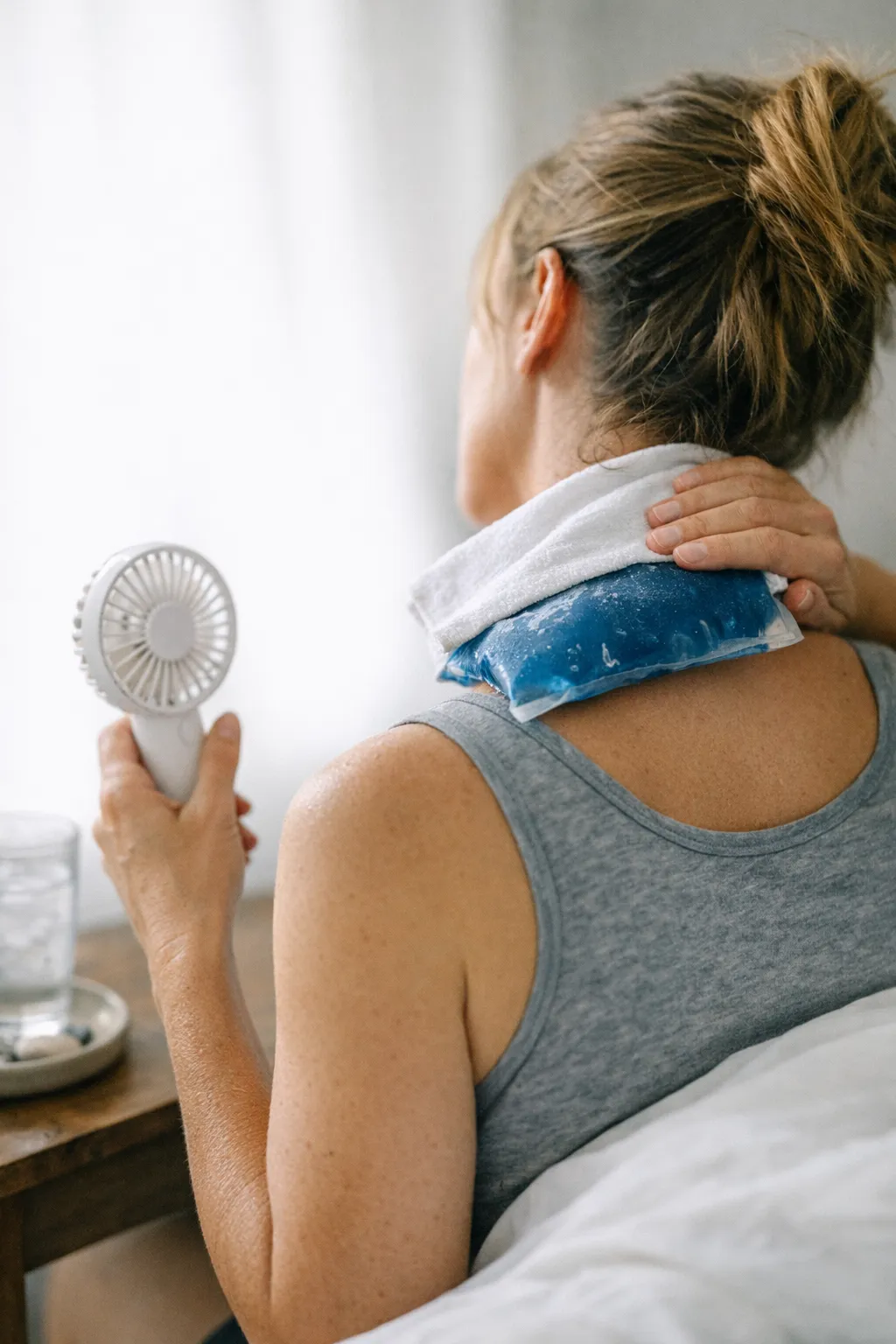
The moment you feel a flash beginning, take these actions in sequence: sip ice water steadily, loosen or remove a clothing layer, turn on the fan or move toward cooler air, and place a cool damp cloth on the back of your neck if one is available. Most hot flashes last between a few seconds and ten minutes, so the goal is to reduce discomfort and move through the episode rather than stop it instantly. Source Avoid reaching for a hot shower or bath at this point, as raising your body temperature will prolong the flash.
How to verify: The flash passes and you feel your body temperature begin to normalize within a few minutes of starting the protocol.
Common fail: Only using one cooling action, such as just the water without the fan or the layer removal, reduces how effective the combined approach is.
-
Practice paced breathing daily, not only during a flash
Sit comfortably and place one hand on your abdomen. Breathe in slowly through your nose for a count of five, feeling your belly rise. Pause briefly, then breathe out fully for a count of five. Repeat this for ten to fifteen minutes each day. Source Practicing outside of flash episodes is what makes this technique usable when you are already overheated and your body is in a stress response. Daily paced breathing has been shown to reduce the perceived intensity of hot flashes over time.
How to verify: When a flash starts, you can move into the breathing rhythm within the first thirty seconds without having to think through the technique.
Common fail: Only attempting the breathing during a flash, with no prior daily practice, makes it hard to use effectively when you are already uncomfortable.
-
Optimize your sleep environment specifically for night sweats
Set your bedroom thermostat lower than your daytime temperature before you go to bed. Use only lightweight cotton or linen sheets and avoid thick duvets or flannel. Wear loose cotton sleepwear rather than synthetic fabrics. Avoid hot baths or showers within an hour of bedtime, as these raise core body temperature and can worsen night sweats. Keep ice water and a small fan within reach of the bed so the cooling protocol from step four is available in the middle of the night without you having to get up and search for anything. For a deeper look at how menopause affects sleep quality and what you can do about it, Hello Again has a dedicated resource on menopause and sleep .
How to verify: You wake up fewer times during the night due to overheating after one to two weeks of these changes.
Common fail: Changing sheets but leaving the room temperature too warm limits how much improvement you will see.
-
Add daily movement to reduce baseline flash frequency
Regular physical activity, whether walking, yoga, dancing, or any low-to-moderate intensity exercise you enjoy, can lower both the frequency and intensity of hot flashes and also supports better sleep and mood. Source Aim for daily movement rather than intense infrequent sessions. If you have a condition such as lymphedema related to cancer treatment, check with your clinician before increasing activity level to make sure the type and intensity are appropriate for your situation.
How to verify: After two to three weeks of consistent daily movement, compare your log entries to your baseline and look for a reduction in flash frequency or intensity.
Common fail: Starting with high-intensity exercise and then stopping due to soreness or scheduling pressure produces no sustained benefit.
-
Review your log after two to three weeks and adjust
Set aside fifteen minutes to read through your hot flash log and compare your most recent entries to your first week. Look for triggers you have not yet addressed, strategies that seem to correlate with fewer or milder flashes, and any patterns tied to specific times of day or activities. Use what you find to update your toolkit, your avoidance list, or your daily routine. This review step is how the plan stays relevant to your specific body and circumstances rather than remaining generic advice.
How to verify: You can identify at least one concrete change to make based on the log review, whether that is cutting a specific trigger, adjusting your sleep setup, or modifying your breathing practice timing.
Common fail: Skipping the review after a few weeks means you continue with a plan that may no longer reflect what is actually driving your symptoms.
-
Talk to your healthcare provider if symptoms persist or worsen
If hot flashes remain frequent or severe after several weeks of consistent lifestyle changes, schedule an appointment to discuss nonhormonal medication options. Clinicians can prescribe medications such as certain antidepressants including venlafaxine or paroxetine, the antiseizure medication gabapentin, the blood pressure medication clonidine, or a newer option called fezolinetant, which targets brain activity involved in temperature regulation. Source Integrative therapies such as acupuncture, mindfulness-based cognitive behavioral therapy, and clinical hypnosis are also worth discussing. If you are interested in herbal supplements, bring a full list of your current medications to that conversation so your provider can check for interactions before you begin anything new.
How to verify: You leave the appointment with a documented nonhormonal management plan, whether medication-based, integrative, or both.
Common fail: Delaying the clinician conversation because symptoms feel manageable most days but are still significantly affecting sleep, mood, or daily function.
How to Know It Is Working
Confirming that your nonhormonal plan is making a difference requires looking at more than just how you feel on any single day. The most reliable way to track progress is to compare your hot flash log from your first week against entries from weeks two and three. You are looking for changes in three areas: how often flashes happen, how long they last, and how intense they feel when they do occur. Improvement in even one of those areas is meaningful and worth building on before adjusting the approach.
- You can run the in-the-moment cooling protocol (ice water, layer removal, fan, paced breathing) within thirty seconds of a flash starting, without having to think through each step.
- Your hot flash log shows a reduction in frequency, duration, or intensity compared to your first week of tracking.
- You have identified at least one or two specific triggers from your log and have reduced your exposure to them.
- You are completing ten to fifteen minutes of paced breathing practice daily and can use the technique automatically during a flash.
- Your sleep environment is fully set up with lightweight cotton sheets, cotton sleepwear, a cooler room temperature, and ice water within reach of the bed.
- Night-time awakenings due to overheating have decreased or you are getting back to sleep more quickly after a night sweat.
- You have added some form of daily movement to your routine and have maintained it for at least two consecutive weeks.
- You have not started any herbal supplement without first discussing it with your healthcare provider.
- If hot flashes are still significantly affecting your quality of life after several weeks, you have scheduled or completed a clinician appointment to discuss nonhormonal medication options.
| Checkpoint | What good looks like | How to test | If it fails, try |
|---|---|---|---|
| In-the-moment cooling protocol | Flash intensity drops and body temperature normalizes within a few minutes of starting the protocol | Run the full sequence during the next flash: ice water, layer removal, fan, paced breathing. Note whether discomfort reduces before the flash would normally peak. | Add a cool damp cloth to the back of the neck and check that the room temperature is not already too warm before the flash begins |
| Paced breathing technique | You move into the five-count inhale and five-count exhale rhythm within thirty seconds of a flash starting | Time yourself during the next flash. If you are still figuring out the counts after a minute, the daily practice outside of flash episodes needs to increase. | Shorten daily practice sessions but increase frequency, practice three shorter sessions per day rather than one longer one |
| Trigger identification and avoidance | Log entries show fewer flashes on days when identified triggers were avoided | Compare log entries from days with and without the trigger present and look for a consistent difference in flash frequency or intensity | Revisit the trigger list and check for less obvious triggers such as stress, tight waistbands, or hot beverages other than coffee |
| Sleep environment setup | Fewer night-time awakenings due to overheating after one to two weeks of changes | Note how many times per night you wake up hot over a seven-day period and compare to the week before the changes were made | Lower the thermostat further, replace any remaining synthetic bedding, and confirm no hot showers are taken within an hour of bedtime |
| Daily movement habit | Consistent daily activity maintained for at least two weeks, with a perceived reduction in stress and flash intensity noted in the log | Review your log for the past two weeks and count how many days included some form of movement, compare flash intensity on active versus inactive days | Switch to a shorter or lower-intensity activity that is easier to fit into a daily schedule, such as a ten-minute walk rather than a full yoga session |
| Overall flash frequency at week three | Log shows a noticeable reduction in how often flashes occur compared to the baseline first week | Count total flash episodes per day in week one versus week three using your log entries | If there is no improvement, book a clinician appointment to discuss nonhormonal medications such as certain antidepressants, gabapentin, or fezolinetant Source |
Troubleshooting: When the Steps Are Not Working
Most people hit at least one obstacle when building a nonhormonal management plan. The fixes below address the most common points where the approach breaks down. Work through the relevant entries before concluding that a strategy does not work for you, since the problem is often in how a step is being applied rather than the step itself. If multiple fixes fail to produce any improvement after two to three weeks, that is the signal to involve a clinician.
-
Symptom:
The cooling protocol is not bringing relief fast enough during a flash.
Why it happens: Using only one cooling action, such as sipping ice water alone, is often not enough. The protocol works because multiple simultaneous inputs lower skin temperature and interrupt the body's heat response. Doing them one at a time, or skipping the fan or layer removal, reduces the combined effect.
Fix: Run all four actions at the same time rather than in sequence: sip ice water, remove a layer, turn on the fan, and begin paced breathing together. If the room is already warm, move to a cooler space before anything else.
-
Symptom:
Paced breathing is not working during an active flash.
Why it happens: The breathing technique requires prior practice to use effectively under physical stress. If you have only tried it during flashes and not during calm moments, your body has not built the habit and the counts feel unfamiliar when you are already overheated.
Fix: Commit to ten to fifteen minutes of paced breathing practice daily outside of flash episodes. After one to two weeks of daily repetition, the rhythm becomes automatic and easier to access when a flash begins. Source
-
Symptom:
Triggers cannot be fully avoided and flashes are still frequent.
Why it happens: Some triggers, such as work-related stress or environmental heat, are not fully within your control. Expecting complete trigger elimination sets up a plan that cannot succeed in real daily life.
Fix: Shift the goal from elimination to reduction. Use your log to identify the two or three triggers with the most impact and focus there first. For unavoidable triggers, prepare your cooling toolkit in advance so you are ready to respond rather than trying to prevent the flash entirely.
-
Symptom:
Night sweats are still disrupting sleep after adjusting the sleep environment.
Why it happens: Changing sheets or sleepwear without addressing room temperature is one of the most common partial fixes. Even breathable cotton fabrics lose their benefit in a room that is still too warm. A hot bath or shower taken close to bedtime can also raise core temperature enough to worsen night sweats. For a fuller picture of how menopause-related changes affect sleep and what additional steps help, see this guide on menopause and sleep .
Fix: Lower the thermostat before you go to bed, avoid hot showers within an hour of sleep, and make sure ice water and a fan are within arm's reach so you can respond to a night sweat without fully waking up and losing the ability to fall back asleep quickly.
-
Symptom:
Flash frequency has not changed after two to three weeks of lifestyle changes.
Why it happens: Lifestyle strategies reduce frequency and intensity over time but do not eliminate hot flashes in all cases. Some people have an underlying pattern that responds better to medication-based intervention, particularly if flashes are driven by treatment-related hormone changes rather than natural menopause.
Fix: Book an appointment with your healthcare provider to discuss nonhormonal medication options. Clinicians can prescribe antidepressants such as venlafaxine or paroxetine, gabapentin, clonidine, or the newer option fezolinetant. These are established nonhormonal tools, not a last resort. Source
-
Symptom:
Herbal supplements are not producing any noticeable improvement.
Why it happens: The evidence base for commonly marketed supplements including black cohosh, dong quai, evening primrose oil, and wild yam is limited. These products are not FDA-regulated, and there is no guarantee that what is on the label matches what is in the product or that it will reduce hot flashes.
Fix: Stop taking any supplement that is not producing benefit and discuss the full list with your clinician before trying a different one. Some supplements can affect hormone receptor activity or interact with cancer treatments, so medical review before any change is essential.
-
Symptom:
Daily exercise is making hot flashes feel worse right after a workout.
Why it happens: Exercise temporarily raises core body temperature, which can trigger a flash in some people, particularly during the first few weeks of a new routine. This does not mean exercise is making the overall pattern worse.
Fix: Switch to cooler times of day for exercise, such as early morning. Work out in a cool environment with a fan running and keep ice water nearby. Lower the intensity initially and build up gradually. The longer-term benefit to flash frequency and sleep quality typically outweighs the short-term trigger effect once your body adjusts.
-
Symptom:
Hot flash logging feels inconsistent and is not producing useful patterns.
Why it happens: Logging only the most severe flashes, or recording entries hours after they happen, produces incomplete data that makes patterns hard to spot. Inconsistent entries are often the result of the tracking method being too cumbersome.
Fix: Simplify the logging format to the minimum useful fields: time, trigger, duration, and intensity on a scale of one to three. A notes app with a quick-entry shortcut is often more sustainable than a written journal. Log immediately during or right after a flash rather than reconstructing it later.
-
Symptom:
Hot flashes are worsening or are accompanied by symptoms such as unexplained weight changes, heart palpitations, or excessive sweating unrelated to heat exposure.
Why it happens: While hot flashes are most commonly related to menopause or hormonal treatment, sudden worsening or unusual accompanying symptoms can sometimes indicate another underlying cause that needs medical evaluation.
Fix: Stop self-managing and contact your healthcare provider promptly. Do not delay evaluation because you assume the symptoms are menopause-related. A clinician can rule out other causes and adjust your management plan accordingly.
What People Ask Next
- How long does a hot flash typically last? Most hot flashes last between a few seconds and ten minutes, with the average falling around one to two minutes. Night sweats follow the same pattern but can disrupt sleep more significantly because they interrupt your rest cycle.
- Can drinking cold water actually stop a hot flash? Sipping ice water at the start of a flash helps lower skin temperature and gives your body a cooling signal, but it works best as part of a combined protocol that also includes a fan, removing a clothing layer, and paced breathing rather than as a standalone fix.
- How long before lifestyle changes reduce hot flash frequency? Most people need two to three weeks of consistent effort before noticing a measurable reduction in how often or how intensely flashes occur. Tracking with a log is the most reliable way to confirm whether changes are having an effect.
- Is black cohosh safe to take for hot flashes? Black cohosh is not FDA-regulated, its effectiveness is not proven, and some cases of liver injury have been associated with its use. Always discuss it with your healthcare provider before starting, particularly if you are on other medications or undergoing cancer treatment.
- What nonhormonal medications can a doctor prescribe for hot flashes? Options include certain antidepressants such as venlafaxine and paroxetine, the antiseizure medication gabapentin, the blood pressure medication clonidine, and a newer drug called fezolinetant that targets the brain pathway responsible for triggering temperature changes.
- Does exercise make hot flashes worse at first? For some people, exercise temporarily raises core body temperature and can trigger a flash during or right after a workout. This typically improves as the body adjusts, and the longer-term effect of regular movement is a reduction in overall flash frequency and intensity.
- Can stress alone trigger a hot flash? Yes, stress and anxiety are established hot flash triggers. They activate a physiological response that raises core temperature in a way that can set off a flash, which is one reason paced breathing and mindfulness-based approaches can reduce both the frequency and the perceived intensity of episodes.
- Are cooling devices like wristbands or special pillows worth trying? Cooling pillows made from breathable materials can genuinely help with night sweats when combined with a cooler room and cotton bedding. Wearable devices marketed specifically to stop hot flashes have limited supporting evidence, so they should not be prioritized over the more established strategies in this guide.
- When should hot flashes prompt a visit to a healthcare provider? Seek medical advice if flashes are severe enough to affect your sleep, mood, or daily function, if they are worsening after several weeks of lifestyle changes, or if they are accompanied by unusual symptoms such as heart palpitations, unexplained weight changes, or excessive sweating unrelated to heat.
- Do these strategies work differently for people going through cancer treatment? The core strategies apply broadly, but people in cancer treatment should check with their oncology team before adding any supplement or integrative therapy, since some can interact with treatment. Exercise intensity may also need to be adjusted based on treatment-related conditions such as lymphedema.
Common Questions About Managing Hot Flashes Without Hormones
What is the fastest way to stop a hot flash without hormones?
The fastest nonhormonal response combines three actions at once: sip ice water, remove or loosen a clothing layer, and turn on a fan or move toward cooler air. Starting slow paced breathing at the same time, inhaling for five counts and exhaling for five counts, helps the body move through the episode more quickly. Using all of these together is consistently more effective than relying on any single action alone.
How long do hot flashes last and will they eventually stop on their own?
A single hot flash typically lasts between a few seconds and ten minutes, with most falling closer to one to two minutes. The overall pattern of having regular hot flashes can persist for anywhere from four to ten years, often peaking in the year after your final menstrual period. Some people continue to experience them into their sixties and seventies, which is why building an active management plan matters rather than waiting them out.
Does paced breathing actually reduce hot flashes or only make them easier to tolerate?
Research supports paced breathing as a tool that can reduce both the perceived intensity and duration of hot flashes when practiced consistently. The key word is consistently: daily practice outside of flash episodes is what makes the technique work when you are already overheated. It is not a placebo, but it also will not eliminate flashes entirely on its own and works best as part of a broader plan that includes trigger management and environmental changes.
Are herbal supplements a reliable nonhormonal option for hot flashes?
Commonly used supplements such as black cohosh, dong quai, evening primrose oil, and wild yam are not FDA-regulated, and the evidence for their effectiveness is limited and inconsistent. Some carry real safety risks, including potential liver injury with black cohosh and interactions with cancer treatments for others. Always discuss any supplement with your healthcare provider before starting, and do not treat them as a clinically equivalent substitute for evidence-based nonhormonal strategies.
What nonhormonal medications can reduce hot flash frequency?
Several prescription medications have demonstrated meaningful reductions in hot flash frequency and intensity without involving hormones. These include certain antidepressants such as venlafaxine and paroxetine, the antiseizure medication gabapentin, and the blood pressure medication clonidine. A newer option called fezolinetant works by targeting the brain pathway that triggers temperature dysregulation and requires liver function monitoring during use. All of these options require a clinician conversation to assess suitability and monitor for side effects.
Can changing what you eat reduce how often hot flashes happen?
Some dietary patterns appear to influence hot flash frequency. A 2022 study found that a low-fat vegan diet combined with a daily serving of soybeans reduced hot flash occurrence over twelve weeks compared to a control group. Avoiding known dietary triggers such as spicy food, caffeine, alcohol, and very hot beverages is also a practical and low-risk first step. Dietary changes alone are unlikely to eliminate flashes but can meaningfully reduce their frequency when combined with other strategies.
Does exercise help with hot flashes or can it make them worse?
Regular daily movement, including walking, yoga, and other moderate-intensity activity, is associated with reduced hot flash frequency and intensity over time and also supports better sleep and mood. Some people notice that exercise temporarily triggers a flash in the short term because it raises core body temperature. This typically improves with consistent practice, and working out in a cool environment with ice water nearby helps manage the transitional period while the longer-term benefits take hold.
When should I stop managing hot flashes on my own and see a doctor?
You should consult a healthcare provider if hot flashes are significantly affecting your sleep, mood, work, or relationships after several weeks of consistent lifestyle changes, or if symptoms are worsening rather than stabilizing. Seek prompt medical evaluation if flashes are accompanied by unusual symptoms such as heart palpitations, unexplained weight changes, or drenching sweats that seem unrelated to heat or activity. These can occasionally indicate a condition other than menopause that needs to be ruled out.
Can integrative therapies like acupuncture or hypnosis help with hot flashes?
Evidence supports several integrative approaches as useful additions to a nonhormonal management plan. Clinical hypnosis, including structured at-home audio-based programs, has been shown to reduce hot flash frequency and improve sleep and mood in some studies. Acupuncture and mindfulness-based cognitive behavioral therapy are also recognized options that some people find effective, particularly for reducing the distress associated with flashes even when frequency does not dramatically change. These are best pursued through qualified providers and discussed with your care team if you are in cancer treatment.
Is it safe to use these strategies if I am going through cancer treatment?
The core nonhormonal strategies, including cooling techniques, paced breathing, trigger avoidance, sleep environment adjustments, and moderate exercise, are generally appropriate during cancer treatment, but individual circumstances vary. Any herbal supplement or integrative therapy should be reviewed by your oncology team before you start, since some can interact with active treatments. Exercise intensity may also need to be modified based on treatment-related conditions. Hormone therapy is typically not an option for people with hormone-sensitive cancers, making nonhormonal strategies especially relevant in this context.