
For women who cannot use systemic hormone therapy - or who prefer not to - there are meaningful, evidence-backed options that range from FDA-approved prescription medications to OTC vaginal products, structured behavioral therapies, and dietary approaches. No single option works best for everyone. Paroxetine and fezolinetant are the strongest prescription choices for hot flashes specifically, while cognitive behavioral therapy offers durable relief without medication side effects. Vaginal moisturizers and lubricants address dryness directly and require no prescription. Herbal options like black cohosh and soy isoflavones are widely used but carry inconsistent evidence. The right starting point depends on which symptoms are most disruptive, what contraindications apply, and how much a woman is willing to invest in time, cost, or behavior change.
TLDR:
- Natural vs non-hormonal menopause relief covers a wide range of options, from FDA-approved prescription drugs to OTC products, mind-body therapies, and dietary supplements - and these categories do not always overlap.
- Paroxetine (Brisdelle) is the only FDA-approved non-hormonal pill specifically indicated for hot flashes, fezolinetant (Veozah) is a newer FDA-approved option that targets the brain pathway directly responsible for vasomotor symptoms.
- Cognitive behavioral therapy has solid evidence for reducing both hot flash frequency and sleep disruption without any medication side effects, making it a strong option for women who want to avoid drugs entirely.
- Vaginal moisturizers, lubricants, and hyaluronic acid suppositories are the most accessible first-line choices for vaginal dryness and sexual discomfort and do not require a prescription.
- Herbal supplements including black cohosh and soy isoflavones are among the most commonly used natural options, but the evidence for their effectiveness is inconsistent and some carry safety concerns with long-term or high-dose use.
- Choosing between these options depends on the primary symptom, any contraindications such as cancer history or liver conditions, and practical factors including cost, insurance coverage, and willingness to commit to behavioral or lifestyle approaches.
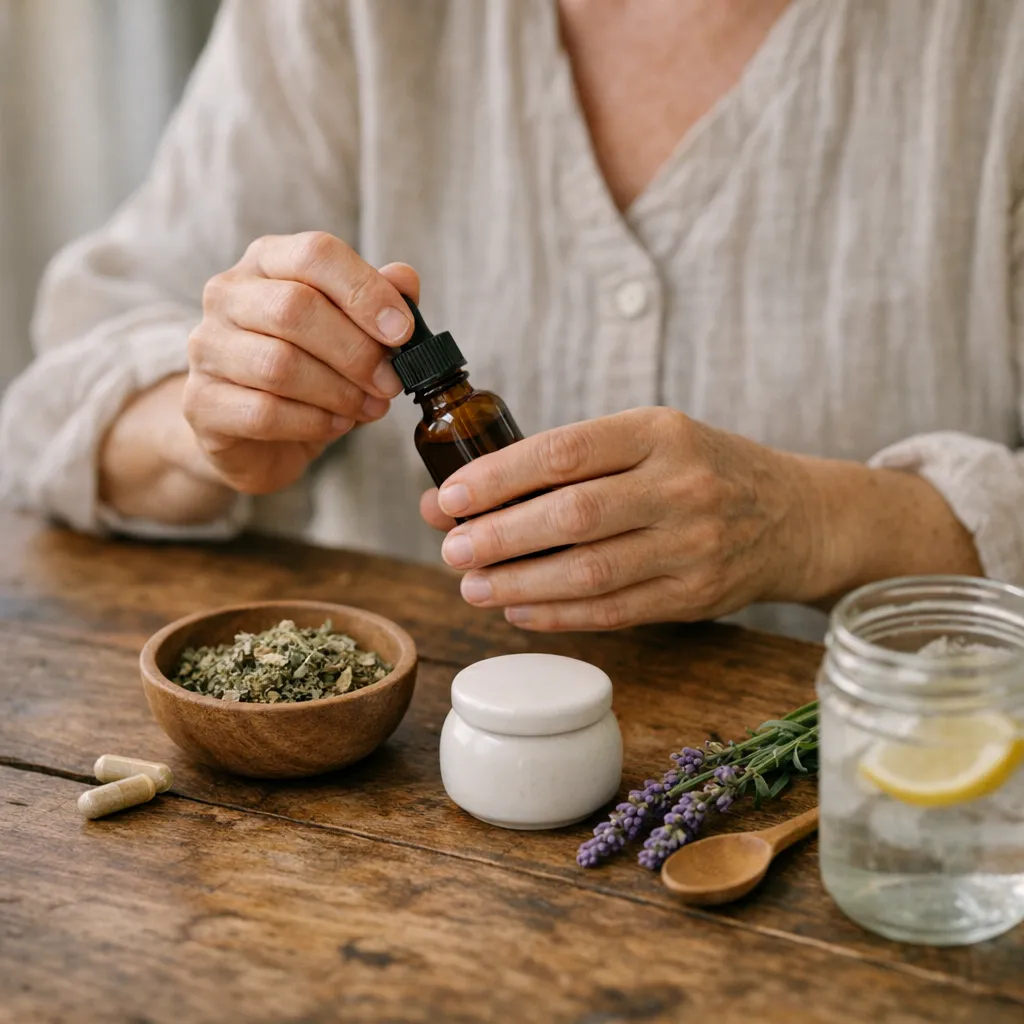
How the Most Common Non-Hormonal and Natural Menopause Relief Options Compare
The options below span FDA-approved prescription medications, over-the-counter products, structured behavioral therapies, and dietary or herbal approaches. They vary significantly in how well they work, what symptoms they target, and what tradeoffs they carry. This table is a starting point for narrowing down which direction fits your symptoms, health history, and practical situation before discussing specifics with a clinician.
| Option | Best for | Main strength | Main tradeoff | Pricing |
|---|---|---|---|---|
| Paroxetine / Brisdelle (low-dose SSRI) | Women wanting the only FDA-approved non-hormonal pill specifically indicated for hot flashes | FDA-approved for vasomotor symptoms, also supports mood, established evidence base | Can reduce libido, requires tapering to stop, not suitable for women on tamoxifen | Not stated |
| Venlafaxine (SNRI) | Women seeking off-label prescription relief for hot flashes with possible mood or anxiety benefit | Widely used, meaningful reduction in hot flash frequency at half the standard antidepressant dose | Off-label use, potential GI side effects, may affect libido, requires tapering | Not stated |
| Fezolinetant / Veozah (NK3R antagonist) | Postmenopausal women with moderate-to-severe hot flashes who want a non-antidepressant prescription mechanism | FDA-approved May 2023, targets the specific brain pathway driving vasomotor symptoms, strong phase 3 trial data | Requires liver enzyme monitoring, newer drug with limited long-term data, insurance coverage inconsistent, higher cost | Not stated |
| Gabapentin | Women whose hot flashes are most disruptive at night and significantly affect sleep quality | Sedating effect can aid nighttime dosing, helps with both hot flashes and sleep disruption | Causes daytime sedation if not timed carefully, off-label use for this indication, not suitable for all patients | Not stated |
| Cognitive Behavioral Therapy (CBT) | Women who prefer a non-pharmacologic, skills-based approach with benefits that persist after treatment ends | Evidence supports reduction in both vasomotor symptoms and sleep disruption, no medication side effects or interactions | Requires access to a trained practitioner, time investment needed, not immediately accessible for all women | Not stated |
| Vaginal Moisturizers and Lubricants (e.g., Replens, Hyalo GYN, K-Y, Astroglide) | Women whose primary complaint is vaginal dryness and sexual discomfort seeking immediate, prescription-free relief | No prescription required, widely available OTC, suitable for women with contraindications to hormones, immediate symptom relief | Addresses vaginal symptoms only, does not reduce hot flashes or systemic symptoms, requires ongoing regular use | Not stated |
| Mind-Body Practices (yoga, MBSR, hypnotherapy) | Women seeking low-risk adjunct or standalone approaches that also support sleep and mood | Associated with reduced vasomotor symptoms and improved sleep and mood in reviews, no drug side effects or interactions | Evidence varies by specific practice and outcome, requires consistent practice, not uniformly effective across all women | Not stated |
| Phytoestrogens and Soy Isoflavones (including dietary soy foods) | Women open to dietary or supplement-based approaches who want a low-risk option to explore alongside other strategies | Widely available, low risk profile for most women, can be obtained through ordinary foods such as tofu, miso, and tempeh | Evidence for hot flash relief is mixed and inconsistent, FDA approval not established, benefits may partly reflect placebo effect | Not stated |
| Black Cohosh | Women interested in a traditionally used herbal option for hot flash relief who understand the limitations of the evidence | Historically widely used, some clinical trials show modest benefit for hot flashes | Evidence is inconsistent, potential liver toxicity at high doses, safety concerns with long-term use, no FDA approval for this indication | Not stated |
| Calcium and Vitamin D Supplementation | Women prioritizing bone health as part of overall menopause management, particularly those not using systemic hormones | Supports bone mineral density, widely recommended alongside any menopause management plan, low risk when taken appropriately | Does not relieve hot flashes, vaginal symptoms, or sleep disruption, benefit is specific to bone health support | Not stated |
How to choose:
- If hot flashes are your primary concern and you want a prescription option with FDA approval specifically for that symptom, paroxetine (Brisdelle) or fezolinetant (Veozah) are the two strongest starting points to discuss with your doctor.
- If night sweats are disrupting your sleep more than daytime hot flashes, gabapentin taken at night or CBT with a sleep focus may be more directly useful than a daytime antidepressant-based option.
- If you cannot use any systemic medications due to cancer history, liver conditions, or drug interactions, mind-body practices and OTC vaginal products are the safest starting categories to explore.
- If vaginal dryness and sexual discomfort are your main complaints, start with OTC lubricants and moisturizers before considering any prescription option, since these carry essentially no systemic risk and are available immediately.
- If you prefer to avoid pharmaceuticals entirely, CBT has the strongest evidence among fully non-pharmacologic approaches and produces benefits that can persist after the treatment period ends.
- If cost and insurance coverage are significant constraints, older generic options such as venlafaxine or gabapentin, along with OTC products and lifestyle strategies, will generally be more accessible than newer drugs like fezolinetant.
- If you are considering herbal supplements or phytoestrogens, be aware that the evidence for these is inconsistent, safety monitoring is limited compared to regulated drugs, and professional guidance is advised before combining them with other medications.
- Bone health is a separate concern from symptom relief and requires its own strategy, calcium and vitamin D supplementation should be considered alongside, not instead of, options that target hot flashes or vaginal symptoms.
A Closer Look at Each Non-Hormonal and Natural Menopause Relief Option
Paroxetine / Brisdelle (Low-Dose SSRI)
Best for: Women who want a prescription non-hormonal option with formal FDA approval specifically for hot flashes, especially those who may also benefit from mood support. It is also a practical choice for women who have already tried lifestyle adjustments without sufficient relief.
What it does well:
- The only FDA-approved non-hormonal medication specifically indicated for vasomotor symptoms, giving it a stronger regulatory foundation than most alternatives in this category.
- Used at doses lower than those prescribed for depression, which reduces the intensity of antidepressant-related side effects while still targeting hot flash frequency.
- Can support mood stability alongside symptom relief, which is relevant for women experiencing mood changes during perimenopause or postmenopause.
- Has an established evidence base built from clinical trials rather than observational data alone.
- Taken orally once daily, which most women find straightforward to integrate into an existing routine.
Watch-outs:
- Can reduce libido, which is a meaningful quality-of-life concern for many women during menopause and should be discussed with a clinician upfront.
- Should not be used by women taking tamoxifen, as paroxetine inhibits the enzyme that activates tamoxifen, potentially reducing its effectiveness in breast cancer treatment.
- Stopping paroxetine requires gradual tapering rather than abrupt discontinuation to avoid withdrawal-like effects.
- As with all SSRIs, GI side effects such as nausea can occur, particularly in the first few weeks of use.
Notable features: Paroxetine at the low 7.5 mg dose used in Brisdelle is distinct from the higher doses used to treat depression or anxiety disorders, so the risk-benefit profile differs from what many women associate with antidepressant therapy. The FDA approval for vasomotor symptoms is specific to this lower dose formulation. For women who are not on tamoxifen and are looking for a non-hormonal prescription starting point, it represents the most clearly labeled option available.
Setup or workflow notes: A prescription is required, and the prescribing clinician should review any current medications for interactions before starting. Most women are advised to give it at least four weeks before evaluating whether hot flash frequency has meaningfully decreased. If discontinuing, a tapering schedule should be discussed with the prescriber rather than stopping abruptly.
Venlafaxine (SNRI)
Best for: Women seeking a prescription non-hormonal option for hot flashes who may also have coexisting anxiety or mood concerns, and who can tolerate the possibility of GI side effects during the initial adjustment period. It is one of the most widely used off-label choices in this category.
What it does well:
- Reduces hot flash frequency meaningfully when used at approximately half the dose typically prescribed for depression, based on clinical evidence.
- Addresses mood and anxiety symptoms simultaneously, which can be relevant for women experiencing emotional changes alongside vasomotor symptoms.
- Has a longer track record of use in menopause management than newer agents, giving clinicians more familiarity with its behavior in this population.
- Available as a generic medication, which makes it more accessible from a cost standpoint than newer branded non-hormonal options.
Watch-outs:
- Its use for hot flashes is off-label, meaning it does not carry the same FDA-approved indication for vasomotor symptoms that paroxetine does.
- GI side effects including nausea are relatively common, particularly during the first one to two weeks of use.
- Like other SNRIs, it can affect sexual function and libido, which should be weighed against symptom relief benefits.
- Discontinuation requires a gradual taper, and stopping abruptly can cause discontinuation syndrome including dizziness, irritability, and sensory disturbances.
Notable features: Venlafaxine works on both serotonin and norepinephrine reuptake, which is thought to influence the thermoregulatory pathways involved in vasomotor symptoms. Desvenlafaxine, its active metabolite, is also used in this context. Other SSRIs including citalopram and escitalopram have been used for the same purpose, giving clinicians some flexibility in choosing within this drug class based on a woman's broader health picture.
Setup or workflow notes: Typically initiated at a lower dose than used for depression, with the prescriber monitoring for tolerability over the first few weeks. Women should be counseled before starting about the likelihood of initial GI symptoms and the need for tapering if they choose to stop. Sharing a full medication list with the prescriber is important given the potential for drug interactions within this drug class.
Fezolinetant / Veozah (NK3R Antagonist)
Best for: Postmenopausal women with moderate-to-severe hot flashes who want a non-antidepressant prescription mechanism and are comfortable with a newer drug that requires periodic liver monitoring. It is a strong option for women who have not responded well to or cannot tolerate SSRIs or SNRIs.
What it does well:
- Targets the neurokinin B pathway in the brain that directly drives vasomotor symptoms, rather than working indirectly through serotonin or norepinephrine systems.
- Received FDA approval in May 2023 specifically for moderate-to-severe vasomotor symptoms associated with menopause, giving it a clear regulatory foundation.
- Supported by phase 3 clinical trial data demonstrating meaningful reductions in hot flash frequency and severity.
- Does not carry the libido-related side effects associated with antidepressant-based therapies, which is a relevant differentiator for many women.
Watch-outs:
- Liver enzyme monitoring is recommended during use, adding a safety oversight requirement that most other non-hormonal options do not carry.
- As a recently approved drug, long-term safety data beyond the clinical trial period are still accumulating.
- Insurance coverage has lagged behind FDA approval, and out-of-pocket costs may be significantly higher than older generic options.
- Currently approved for postmenopausal use, its application in perimenopause is less clearly defined in available guidance.
Notable features: Fezolinetant represents a mechanistically distinct category compared to every other non-hormonal option in this comparison. By blocking the NK3 receptor, it interrupts the signaling pathway in the hypothalamus that triggers hot flashes at their neurological source rather than modulating mood-related neurotransmitters. Elinzanetant, another drug in the same class, has shown promising results in clinical trials and may offer an additional option in this category as development continues.
Setup or workflow notes: Requires a prescription and baseline liver function testing before starting, with follow-up monitoring as directed by the prescribing clinician. Women should discuss insurance coverage and potential cost before committing, given the variability in plan-level reimbursement. Because this is a newer drug, fewer clinicians may have direct prescribing experience with it compared to SSRIs or SNRIs, so asking specifically about it during an appointment may be necessary.
Gabapentin
Best for: Women whose hot flashes are most disruptive at night and whose sleep quality is suffering as a direct result. The sedating properties that can be a drawback during the day become an advantage when the medication is timed to nighttime dosing.
What it does well:
- Reduces hot flash frequency and is particularly useful when dosing is timed around nighttime symptoms and sleep disruption.
- The sedating effect, when used strategically at bedtime, can address both the hot flash and the resulting sleep difficulty in a single step.
- Offers an alternative mechanism for women who cannot tolerate or are contraindicated for antidepressant-based options.
- Available as a generic medication, keeping cost relatively accessible compared to newer branded alternatives.
Watch-outs:
- Sedation is the most common side effect and can carry over into daytime functioning if dosing is not carefully timed or if the dose is too high.
- Its use for vasomotor symptoms is off-label, it is primarily approved for seizure disorders and nerve pain.
- Dizziness and coordination effects are possible, particularly in older women or those taking other sedating medications.
- Not appropriate for women with certain kidney conditions, a full medical review is needed before starting.
Notable features: Gabapentin's utility in menopause management is closely tied to the overlap between hot flashes and sleep disruption, which makes it a more targeted fit for women whose symptoms are concentrated in the evening and overnight hours rather than throughout the day. Its mechanism of action for vasomotor symptoms is not fully established but is thought to involve modulation of central nervous system pathways involved in temperature regulation.
Setup or workflow notes: Typically started at a low dose and adjusted based on response and tolerability. Timing the dose one to two hours before bed is a common approach when the primary goal is nighttime symptom management. Women should avoid driving or operating machinery until they know how the medication affects their alertness, and should review all current medications with their prescriber given the potential for additive sedation.
Cognitive Behavioral Therapy (CBT)
Best for: Women who prefer a non-pharmacologic, structured approach to managing hot flashes and sleep disruption, and who want skills that remain useful after the treatment period ends. It is particularly well suited to women for whom medication side effects or contraindications are a significant concern.
What it does well:
- Evidence supports meaningful reductions in both the frequency and perceived severity of vasomotor symptoms, as well as improvements in sleep quality.
- Produces benefits that can persist after the active treatment period ends, unlike pharmacologic options that require ongoing use to maintain effect.
- Carries no drug side effects, no contraindications related to cancer history or organ function, and no interactions with other medications.
- Addresses the psychological and behavioral dimensions of menopause symptoms - including anxiety about hot flashes and disrupted sleep patterns - that medications do not directly target.
- Can be delivered in individual or group formats, and evidence for telephone and digital delivery formats is growing.
Watch-outs:
- Access to a trained CBT practitioner with menopause experience is not universally available and may require significant effort to locate depending on location.
- Requires active participation and regular practice outside of sessions, which is a time commitment some women find difficult to sustain.
- Relief is not immediate in the way that a medication dose can produce relatively rapid effects, benefit builds over several weeks of engagement.
- Cost and insurance coverage for behavioral therapy sessions vary significantly and may create a barrier for some women.
Notable features: CBT for menopause typically incorporates techniques targeting hot flash-related anxiety, sleep restriction and stimulus control for insomnia, and cognitive restructuring around symptom appraisal. Unlike mindfulness-based approaches, which emphasize present-moment awareness, CBT involves direct identification and modification of thought patterns and behaviors that amplify symptom distress. Clinical hypnosis has also shown evidence for hot flash reduction and shares some of the non-pharmacologic advantages of CBT.
Setup or workflow notes: A standard course of CBT for menopausal symptoms typically involves six to eight sessions, though formats vary. Women should look specifically for therapists with experience in menopause-related presentations or sleep-focused CBT rather than assuming a general CBT background will translate directly. Some structured self-help programs and digital CBT tools targeting menopause symptoms have been developed and may expand access for women who cannot easily access in-person care.
Vaginal Moisturizers and Lubricants
Best for: Women whose primary concern is vaginal dryness, irritation, or discomfort during sexual activity, and who want immediate, accessible relief without a prescription or any systemic hormonal exposure. These products are also a sensible first step before exploring any prescription option for vaginal symptoms.
What it does well:
- Vaginal moisturizers such as Replens and Hyalo GYN are designed for regular use - typically every two to three days - to maintain vaginal tissue hydration over time rather than just at the point of intercourse.
- Lubricants such as K-Y and Astroglide provide immediate reduction in friction and discomfort during sexual activity and are available in water-based and silicone-based formulations to suit different preferences.
- Hyaluronic acid vaginal suppositories have received FDA clearance as a non-hormonal option specifically for vaginal dryness, adding a regulated product to the OTC landscape.
- Suitable for women with contraindications to any form of estrogen therapy, including those with a history of hormone-sensitive cancers.
- No systemic absorption, no drug interactions, and no monitoring requirements.
Watch-outs:
- These products address vaginal symptoms only and have no effect on hot flashes, night sweats, sleep disruption, or mood changes.
- Ongoing regular use is required to maintain the benefit, unlike a behavioral therapy, there is no lasting structural change from use.
- Oil-based lubricants can degrade latex condoms and may cause irritation in some women, product selection should account for individual sensitivities.
- For women with significant vaginal atrophy or recurrent urinary symptoms, OTC products alone may not provide sufficient relief, and a clinician consultation about low-dose local estrogen or other options may be warranted.
Notable features: The distinction between a lubricant and a moisturizer is practically important: lubricants are used situationally for sexual comfort, while moisturizers are used on a regular schedule to address the underlying dryness of vaginal tissue. Using both in combination is common and appropriate. Silicone-based lubricants tend to last longer than water-based options and are not absorbed into tissue, though they require soap and water to remove and are not compatible with silicone-based sex toys.
Setup or workflow notes: Moisturizers are most effective when used consistently on a schedule rather than only when symptoms feel acute. Women should introduce new products gradually to check for sensitivity reactions before committing to regular use. A clinician or pharmacist can help navigate the range of products available, particularly for women who have not found adequate relief with standard options or who have additional vaginal health concerns beyond dryness.
Mind-Body Practices: Yoga, Mindfulness-Based Stress Reduction, and Hypnotherapy
Best for: Women who want a low-risk, medication-free approach that addresses hot flashes alongside secondary concerns such as sleep quality, mood, and stress, and who are willing to invest time in developing a regular practice.

Which Non-Hormonal or Natural Menopause Relief Option Fits Your Situation
The best starting point depends on three things: which symptoms are causing the most disruption, whether any medical contraindications rule out certain options, and how much weight you place on factors like avoiding medication side effects, minimizing cost, or not needing a prescription. No single option covers every symptom equally well, and many women find that combining two complementary approaches - for example, a prescription option for hot flashes alongside an OTC product for vaginal dryness - provides more complete relief than any one option alone.
- If hot flashes are your primary symptom and you want a prescription option with FDA approval specifically for that indication, choose paroxetine (Brisdelle) because it is the only non-hormonal medication with a formal vasomotor symptom label and has an established clinical evidence base at the lower dose used for this purpose.
- If you want a non-hormonal prescription drug that targets the brain pathway directly responsible for hot flashes rather than working through antidepressant mechanisms, choose fezolinetant (Veozah) because it blocks the neurokinin B receptor that triggers vasomotor symptoms at their neurological source, and it carries FDA approval for postmenopausal use as of May 2023.
- If night sweats are disrupting your sleep more than daytime hot flashes, choose gabapentin because its sedating effect can be used strategically at bedtime to address both the vasomotor symptom and the resulting sleep difficulty in a single step.
- If you prefer to avoid all medication and want a structured, skills-based approach with durable benefits, choose cognitive behavioral therapy because the evidence supports reductions in both hot flash severity and sleep disruption, and the skills developed during treatment continue to be useful after the active therapy period ends.
- If vaginal dryness or discomfort during sex is your main concern and you want something you can start immediately without a prescription, choose vaginal moisturizers and lubricants because they are widely available OTC, carry no systemic risk, and are appropriate even for women with contraindications to any form of estrogen therapy.
- If you cannot use hormones or antidepressant-based medications due to a history of hormone-sensitive cancer or drug interactions, choose mind-body practices such as yoga, mindfulness-based stress reduction, or hypnotherapy because they carry no contraindications, no drug interactions, and are supported by evidence for reducing vasomotor symptoms and improving sleep and mood.
- If you want to explore a dietary or supplement-based approach as a low-commitment first step, choose phytoestrogens and soy isoflavones because they can be incorporated through ordinary foods such as tofu, tempeh, and miso with minimal risk, though you should enter with realistic expectations given the inconsistent evidence for hot flash relief.
- If you are drawn to herbal options and have heard of black cohosh, proceed with caution and medical guidance rather than self-prescribing, because while some trials show modest benefit, the evidence is inconsistent and high-dose or long-term use carries potential liver safety concerns that warrant professional oversight.
- If bone health is a priority alongside symptom management and you are not using systemic hormones, incorporate calcium and vitamin D supplementation into your overall plan because accelerated bone loss after menopause is a separate but important concern that OTC supplementation can help address when dietary intake alone is insufficient.
- If cost and insurance access are significant barriers, choose venlafaxine or gabapentin over newer branded options because both are available as generics at substantially lower cost, or prioritize lifestyle-based approaches and OTC products that carry no prescription requirement and predictable out-of-pocket pricing.
- If you are on tamoxifen for breast cancer treatment, avoid paroxetine specifically and discuss all non-hormonal options with your oncologist before starting anything new, because paroxetine inhibits the enzyme that activates tamoxifen and can reduce its effectiveness.
- If you are in perimenopause rather than postmenopause and are also considering contraception alongside symptom relief, raise both goals explicitly with your clinician because some options - including fezolinetant - are currently approved only for postmenopausal use, and a combined approach may be needed to address both needs safely.
People usually ask next
- Can you use more than one non-hormonal option at the same time? Yes, combining options that target different symptoms is common and often appropriate - for example, using a prescription medication for hot flashes alongside OTC vaginal moisturizers for dryness - but any combination involving prescription drugs should be reviewed by a clinician to check for interactions.
- How long does it take for non-hormonal options to start working? Timing varies significantly by option: lubricants and moisturizers work immediately, SSRIs and SNRIs typically require two to four weeks before hot flash reduction becomes noticeable, fezolinetant showed benefit within the first week in clinical trials, and CBT builds effect gradually over several weeks of consistent engagement.
- Are these options safe if I have a history of breast cancer? Many non-hormonal options including CBT, mind-body practices, OTC vaginal products, and most prescription options in this comparison are used in women with cancer history, but the specific safety profile depends on the individual treatment plan, and any new therapy should be discussed with the oncology team before starting.
- Do I need a doctor to access any of these options? Vaginal moisturizers, lubricants, soy-based foods, mind-body practices, and lifestyle adjustments are all accessible without a prescription, but paroxetine, venlafaxine, fezolinetant, and gabapentin require a prescription and an appropriate clinical evaluation before use.
- Is local vaginal estrogen considered a non-hormonal option? No - low-dose local vaginal estrogen is technically a hormonal therapy, even though its systemic absorption is minimal and its safety profile differs meaningfully from systemic hormone therapy, it is often discussed alongside non-hormonal options for vaginal symptoms, but women with contraindications to estrogen should confirm its appropriateness with their clinician.
- What should I tell my doctor before starting any of these options? Share a complete list of all current medications including supplements, your full medical history including any cancer diagnoses or clotting history, which symptoms are most disruptive, and any preferences around avoiding certain side effects such as libido changes or sedation, so the clinician can match the recommendation to your actual situation.
- Do the benefits of non-hormonal options last after stopping them? CBT produces skills-based benefits that tend to persist after treatment ends, while pharmacologic options generally require ongoing use to maintain symptom relief, lifestyle and dietary approaches also require continued practice or intake to sustain any benefit they provide.
Questions Women Commonly Have About Non-Hormonal and Natural Menopause Relief
Is fezolinetant actually better than SSRIs for hot flashes?
Fezolinetant and SSRIs work through entirely different mechanisms, which makes a direct superiority comparison difficult. Fezolinetant targets the specific brain pathway that triggers hot flashes, while SSRIs influence serotonin signaling more broadly. Phase 3 trial data for fezolinetant show meaningful reductions in hot flash frequency and severity, but SSRIs like paroxetine have a longer track record. The better choice depends on individual health factors, medication tolerability, and cost considerations rather than one being universally superior.
Can lifestyle changes alone be enough to manage menopause symptoms?
For some women with mild symptoms, avoiding known triggers such as caffeine, alcohol, and spicy foods, combined with consistent sleep hygiene and stress reduction practices, provides sufficient relief without any pharmacologic intervention. For women with moderate to severe vasomotor symptoms, lifestyle adjustments are more useful as a complement to other therapies than as a standalone strategy. The honest answer is that severity of symptoms largely determines whether lifestyle changes alone are adequate.
Are herbal supplements like black cohosh regulated and tested for safety?
In the United States, herbal supplements are regulated as dietary supplements rather than drugs, which means they are not required to demonstrate safety or efficacy before reaching store shelves. Black cohosh has been studied in clinical trials with inconsistent results for hot flash relief, and there are documented cases of liver toxicity associated with high doses or prolonged use. Using any herbal product under the guidance of a clinician rather than self-prescribing is the safest approach.
Do phytoestrogens from food work the same way as phytoestrogen supplements?
Dietary sources of phytoestrogens such as tofu, miso, tempeh, and soy milk deliver isoflavones at lower and more variable concentrations than standardized supplement doses. The evidence for hot flash relief from both forms is mixed, but food-based intake carries a more favorable safety profile than high-dose supplementation. Women with a history of hormone-sensitive cancers should discuss even dietary phytoestrogen intake with their clinician, though current evidence does not establish harm at typical food consumption levels.
Does gabapentin affect memory or cognitive function during menopause?
Gabapentin can cause sedation, dizziness, and in some cases cognitive blunting, particularly at higher doses or in older women. These effects are most relevant when dosing is not carefully timed or when gabapentin is combined with other sedating medications. When used at a low dose timed specifically for nighttime symptom management, the cognitive impact during waking hours is generally less pronounced, but this should be assessed individually with a prescribing clinician who knows the full medication list.
How is cognitive behavioral therapy for menopause different from standard CBT?
CBT adapted for menopause incorporates techniques specifically targeting hot flash-related anxiety, the sleep disruption patterns that night sweats create, and the way women cognitively appraise and respond to their symptoms. Standard CBT addresses thought patterns and behaviors broadly and may not include these menopause-specific components. Seeking a practitioner with direct experience in menopausal presentations or sleep-focused CBT, rather than assuming any CBT-trained therapist will deliver the same outcomes, produces better results.
Is it safe to use vaginal moisturizers and lubricants long term?
Vaginal moisturizers and water-based or silicone-based lubricants are generally considered safe for ongoing long-term use. They carry no systemic absorption, no known drug interactions, and no contraindications related to cancer history or organ function. Women should check product ingredients for potential irritants such as glycerin, fragrances, or preservatives if they experience sensitivity reactions, and silicone-based products should not be used with silicone toys as they can degrade the material.
What non-hormonal options are available specifically for perimenopausal women rather than postmenopausal women?
Most non-hormonal options in this comparison - including SSRIs, SNRIs, gabapentin, CBT, mind-body practices, and OTC vaginal products - can be used across both perimenopausal and postmenopausal stages. Fezolinetant is currently approved specifically for postmenopausal vasomotor symptoms, making its use in perimenopause less clearly defined. Perimenopausal women who also need contraception should raise that goal alongside symptom management with their clinician, as it affects which combined approaches are appropriate.
Can non-hormonal options help with mood and sleep or only with hot flashes?
Several non-hormonal options extend beyond hot flash relief. SSRIs and SNRIs address mood and anxiety alongside vasomotor symptoms. Gabapentin, when timed at night, targets both hot flash frequency and sleep disruption simultaneously. CBT has evidence for improving sleep quality directly, not only as a downstream effect of fewer night sweats. Mind-body practices including yoga and mindfulness-based stress reduction are associated with improvements in mood, sleep, and perceived stress in addition to vasomotor symptom reduction.