
To make sex less painful after menopause you will start with simple, noninvasive strategies and build up to physician guided therapies if needed. Begin by using regular vaginal moisturizers and a water based lubricant during intercourse, choosing products that are compatible with condoms. Increase foreplay and warm up to prepare the vaginal tissues, and apply moisturizers daily to support tissue moisture and thickness. If symptoms persist after a few weeks, consult a healthcare provider to discuss prescription options such as vaginal estrogen, DHEA or ospemifene, and to rule out infections or other causes. Depending on your history, pelvic floor physical therapy or guidance on vaginal dilators can help restore elasticity. Track your symptoms, adjust products and timing as advised, and maintain open communication with your partner and clinician. With consistent use and professional guidance, most people experience meaningful relief over weeks to months.
This is for you if:
- You are experiencing painful intercourse after menopause and want relief without surgery
- You prefer non invasive, non hormonal options first and want a clear plan
- You are open to using OTC moisturizers lubricants and seeking clinician guidance for prescription options
- You want practical steps that you can implement at home with a realistic timeline
- You are willing to work with a healthcare provider to address other possible causes and safety considerations
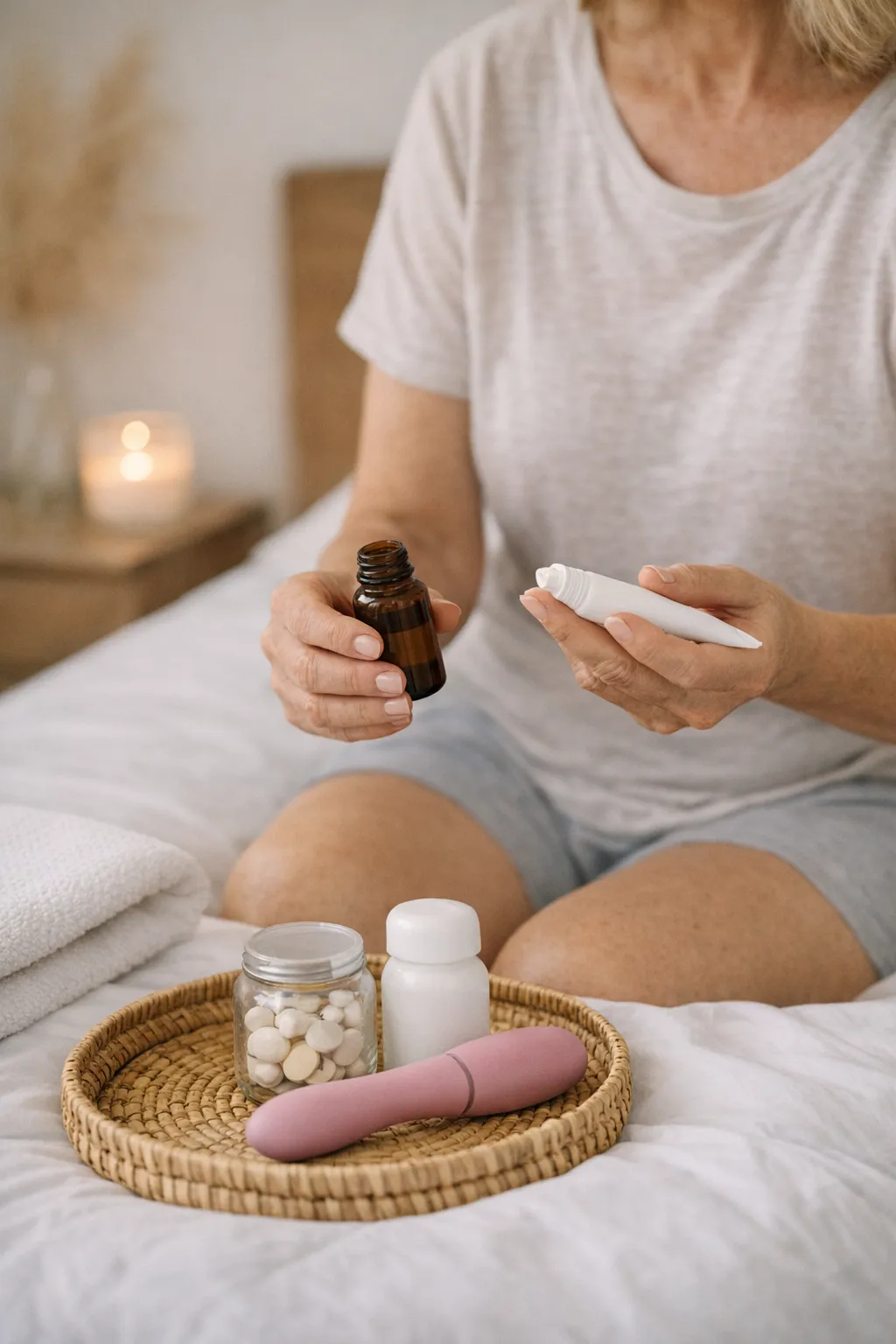
What you need before you start easing pain during sex after menopause
Prerequisites matter because they ensure safety, personalize the plan, and set up a clear path to relief. By collecting the right products, medical guidance, and support, you begin with simple, noninvasive steps and only escalate when needed. This foundation helps you choose compatible lubricants and moisturizers, discuss prescription options with a clinician, and monitor progress over weeks to months.
Before you start, make sure you have:
- Access to a healthcare provider (gynecologist urogynecologist or primary care) for evaluation and guidance
- A selection of water-based and silicone lubricants
- Awareness that oil-based lubricants should not be used with latex condoms
- OTC vaginal moisturizers such as polycarbophil gel for regular use
- Willingness to discuss prescription options if OTC measures are insufficient
- Knowledge of vaginal estrogen risks and alternatives when appropriate
- Availability of prescription therapies such as vaginal estrogen DHEA or ospemifene if recommended
- Time to evaluate effectiveness over weeks to months
- Access to pelvic floor therapy or guidance on vaginal dilators if advised
- Ability to track symptoms and response to therapies
- Clear communication with partner and clinician
- Awareness to rule out infections or other conditions if symptoms persist
Take action now to ease sex related pain after menopause
This procedure guides you through practical steps you can start today and build on with professional support. Begin with simple at home measures that address moisture and friction, then add preparation strategies for comfort. If needed, explore clinician guided prescription options and specialized therapies. Stay patient and consistent, track how your body responds, and keep open communication with your healthcare provider and partner to tailor the plan to your unique needs.
-
Assess readiness
Meet with a clinician to review your menopause history and confirm that vaginal dryness is contributing to pain. Vaginal dryness after menopause is common and treatable with noninvasive options. Discuss symptoms safety and what outcomes matter most to you. Source
How to verify: You have a personalized plan with questions to ask your clinician.
Common fail: Starting without medical guidance can miss underlying conditions or contraindications.
-
Gather supplies
Assemble water based and silicone lubricants along with OTC vaginal moisturizers. Having the right products on hand makes daily care and intercourse smoother. Avoid oil based products with latex condoms. Source
How to verify: You have readily available products and a clear usage plan.
Common fail: Using incompatible lubricants or running out of supplies mid plan.
-
Begin OTC regimen
Apply OTC vaginal moisturizers regularly as directed and use a water-based or silicone lubricant during sex to reduce friction. This foundation supports tissue moisture and comfort. Source
How to verify: Friction lessens and comfort improves during daily activities and sex.
Common fail: Insufficient frequency or incorrect product selection reduces benefit.
-
Increase foreplay
Extend arousal and warm up the vaginal tissues before penetration to improve moisture readiness and comfort. This simple adjustment can make intercourse more tolerable. Source
How to verify: Reports of easier entry and reduced initial pain.
Common fail: Skipping foreplay or rushing to penetration.
-
Discuss prescription options
If OTC measures are not enough, talk with your clinician about prescription options such as vaginal estrogen DHEA or ospemifene, selected to fit your medical history and risk profile. Source
How to verify: A treatment plan with prescribed options and scheduled follow ups.
Common fail: Delaying discussion or choosing unsuitable therapies without professional guidance.
-
Engage pelvic floor therapy
If advised, pursue pelvic floor physical therapy or guided dilator work to improve tissue elasticity and reduce pain during sex. This adds a rehabilitative approach to comfort. Source
How to verify: Clinician notes show improved pelvic muscle relaxation and tissue response.
Common fail: Skipping therapy or not following home exercise recommendations.
-
Reassess and adjust plan
Regularly review symptoms with your clinician and adjust products or therapies as needed to maintain comfort and function. Ongoing evaluation helps personalize care and sustain progress.
How to verify: Symptoms remain improved and the plan is updated as needed.
Common fail: Sticking with a plan that stops working or ignoring warning signs.
Verification progress: confirm relief and comfort after menopause
To confirm progress, observe how intercourse feels, tissue moisture levels, and overall comfort with your current plan. Keep a simple log tracking pain during sex, lubrication use, foreplay duration, and any irritation. Review the log with your clinician and partner to determine if symptoms are improving and whether adjustments are needed. Consistency and open communication help tailor care and sustain progress. If relief remains limited, discuss prescription options or pelvic floor therapy to guide next steps.
- Track pain during intercourse regularly
- Monitor tissue moisture and overall comfort
- Check product adherence and routine consistency
- Note any irritation or adverse reactions
- Review progress with your clinician at follow ups
- Engage your partner in feedback about comfort
- Observe if you can return to previously painful positions
- Assess for any signs of infection or other conditions
- Watch for side effects if using prescription therapies
| Checkpoint | What good looks like | How to test | If it fails, try |
|---|---|---|---|
| Pain during intercourse | Pain substantially reduced across most positions | Self report or partner feedback after sessions | Increase lubrication, extend foreplay, or consult clinician for alternatives |
| Tissue moisture level | Tissues feel moist and comfortable without irritation | Visual and tactile check after product use | Adjust moisturizer or switch products under guidance |
| Product adherence | OTC and Rx therapies used as directed | Daily log shows consistent use | Set reminders or simplify regimen |
| Prescribed therapy response | Symptom relief with chosen prescription therapy | Clinician follow up or diary notes | Reassess type or dosing with clinician |
| Overall sexual function | Sexual activity resumed with less fear and pain | Both partners report improved experience | Consider pelvic floor therapy or therapy referral |
Troubleshooting: practical fixes for persistent pain during sex after menopause
When pain persists, targeted adjustments can restore comfort while you work with a clinician on long term care. This concise guide highlights common issues, why they occur, and clear, actionable fixes you can implement now. Track responses to each fix and consult your healthcare provider if symptoms continue or worsen to ensure safe effective care.
-
Symptom:
Pain with penetration
Why it happens: Vaginal thinning and reduced lubrication from estrogen loss increase friction and cause microtrauma during sex. Source
Fix: Start with extended foreplay to raise arousal, then apply a generous layer of water based lubricant before penetration. If pain persists, discuss vaginal estrogen or DHEA with your clinician.
-
Symptom:
Severe dryness not improved by OTC
Why it happens: OTC moisturizers may help, but tissue thinning often requires prescription therapy. Source
Fix: Schedule a clinician visit to discuss prescription options such as vaginal estrogen or DHEA or ospemifene and tailor dosing to your history.
-
Symptom:
Burning or irritation after sex
Why it happens: Friction can cause microtrauma and irritation, irritants can aggravate sensitive tissue. Source
Fix: Use fragrance free lubricants and moisturizers, test new products on a small area first, and rinse gently after sex.
-
Symptom:
Itching or vulvar discomfort
Why it happens: Irritants or dermatitis from scented products or soaps can trigger itching.
Fix: Switch to unscented, gentle products and avoid potential irritants, if itching persists, seek evaluation for dermatitis or infection.
-
Symptom:
Urinary burning or pain with urination
Why it happens: Genitourinary syndrome of menopause can irritate the urethra and bladder during and after sex. Source
Fix: Discuss vaginal estrogen therapy with your clinician and adopt bladder friendly strategies such as timed voiding and gentle cleansing.
-
Symptom:
Pain with certain positions
Why it happens: Deeper penetration or awkward angles can increase contact and friction in tender tissue.
Fix: Try shallower positions, use pillows to adjust angle, and practice slow entry combined with extended foreplay.
-
Symptom:
Vaginal narrowing or tightness
Why it happens: Aging tissue can lose elasticity leading to discomfort with insertion. Source
Fix: Seek guidance on vaginal dilators or pelvic floor therapy to gradually restore elasticity and comfort.
-
Symptom:
Reactions to products
Why it happens: Allergies or sensitivities to fragrances or additives can trigger irritation.
Fix: Stop the suspected product, patch test new items, and choose fragrance free, hypoallergenic options.
What readers ask next about making sex less painful after menopause
- What is genitourinary syndrome of menopause and why does it cause pain during sex? GSM describes vaginal and urinary changes after menopause due to estrogen loss. Dryness, thinning tissue, and irritation can lead to painful intercourse.
- Should I start with OTC lubricants or moisturizers first? Begin with a daily vaginal moisturizer to improve tissue health and use a water based lubricant at intercourse. If symptoms persist, consult a clinician for prescription options.
- How long does vaginal estrogen take to work? Vaginal estrogen forms can improve moisture and thickness over weeks to months. Individual response varies by product and person.
- Is vaginal estrogen safe if I have a history of breast cancer? A breast cancer history requires a discussion with your oncologist before starting estrogen. Non-hormonal options may be safer depending on risk, and local low-dose estrogen is sometimes considered under supervision.
- Are DHEA or ospemifene effective for vaginal dryness and pain with sex? DHEA and ospemifene are prescription options that can help improve vaginal tissue. Results vary and treatment should be guided by a clinician.
- Should I pursue pelvic floor therapy? Pelvic floor physical therapy can help relax pelvic muscles and reduce pain during sex, often with several sessions and home exercises.
- Can I rely on lubricants long term? Lubricants provide ongoing relief, but some people may need to combine them with moisturizers or prescription therapies to maintain tissue health.
- When should I see a clinician for persistent pain? If pain persists despite OTC measures or new symptoms appear, seek evaluation to rule out infections or other conditions and to discuss alternative therapies.
What readers want to know next about easing sex pain after menopause
-
What is genitourinary syndrome of menopause and why does it cause pain during sex?
GSM describes thinning and drying of vaginal tissues and urinary tract changes that occur after menopause due to lower estrogen, leading to dryness and irritation. Treatments focus on restoring moisture and tissue health with moisturizers lubricants and prescription options when needed, and you should discuss risks and alternatives with your clinician, for more information see Mayo Clinic resources.
-
Should I start with OTC lubricants or moisturizers first?
Start with a regular vaginal moisturizer to improve tissue health and use a water based lubricant at sex to reduce friction. If symptoms persist, consult a clinician to discuss prescription options and possible hormonal or non hormonal therapies.
-
How long does vaginal estrogen take to work?
Vaginal estrogen tends to improve moisture and tissue thickness over weeks to months, and individual response varies by product and person. Consistency and following your clinician's dosing plan are important for steady relief.
-
Is vaginal estrogen safe if I have a history of breast cancer?
A history of breast cancer requires a careful discussion with your oncologist before starting estrogen containing therapies. Non hormonal options may be safer depending on risk, and local low dose estrogen is sometimes considered under supervision. Source
-
Are DHEA or ospemifene effective for vaginal dryness and pain with sex?
DHEA vaginal suppositories and ospemifene are prescription options that can help improve vaginal tissue but results vary and relief may take weeks. Discuss with your clinician to tailor dosing and monitor for side effects. Source
-
Should I pursue pelvic floor therapy?
Pelvic floor physical therapy can help relax pelvic muscles and reduce pain during sex, often with several sessions and home exercises. Your clinician can advise whether therapy is appropriate for you and how to integrate it with other treatments. Source
-
Can I rely on lubricants long term?
Lubricants provide ongoing friction relief, and many people benefit from pairing them with moisturizers for tissue health. In some cases prescription therapies or pelvic floor approaches may be needed to sustain long term comfort.
-
When should I see a clinician for persistent pain?
See a clinician if pain persists despite OTC measures or if new symptoms appear that could signal an infection or other condition. A clinician can evaluate causes and tailor a plan that may include prescription therapies or therapy.