
Vaginal atrophy after menopause causes the vaginal lining to become thinner, drier, and less elastic as estrogen levels decline, producing symptoms that include vaginal dryness, burning, itching, painful intercourse (dyspareunia), unusual discharge, and light spotting after sex. Many women also experience urinary symptoms such as frequent urinary tract infections, increased urgency, and leakage, which is why the condition is now more broadly called genitourinary syndrome of menopause (GSM). Symptoms tend to develop gradually rather than appearing immediately at menopause, with many women not noticing them until five to ten years after their last period. The condition is more common than most people realize: at least 50% of postmenopausal women develop signs of GSM, yet three in four women with symptoms never seek medical care.
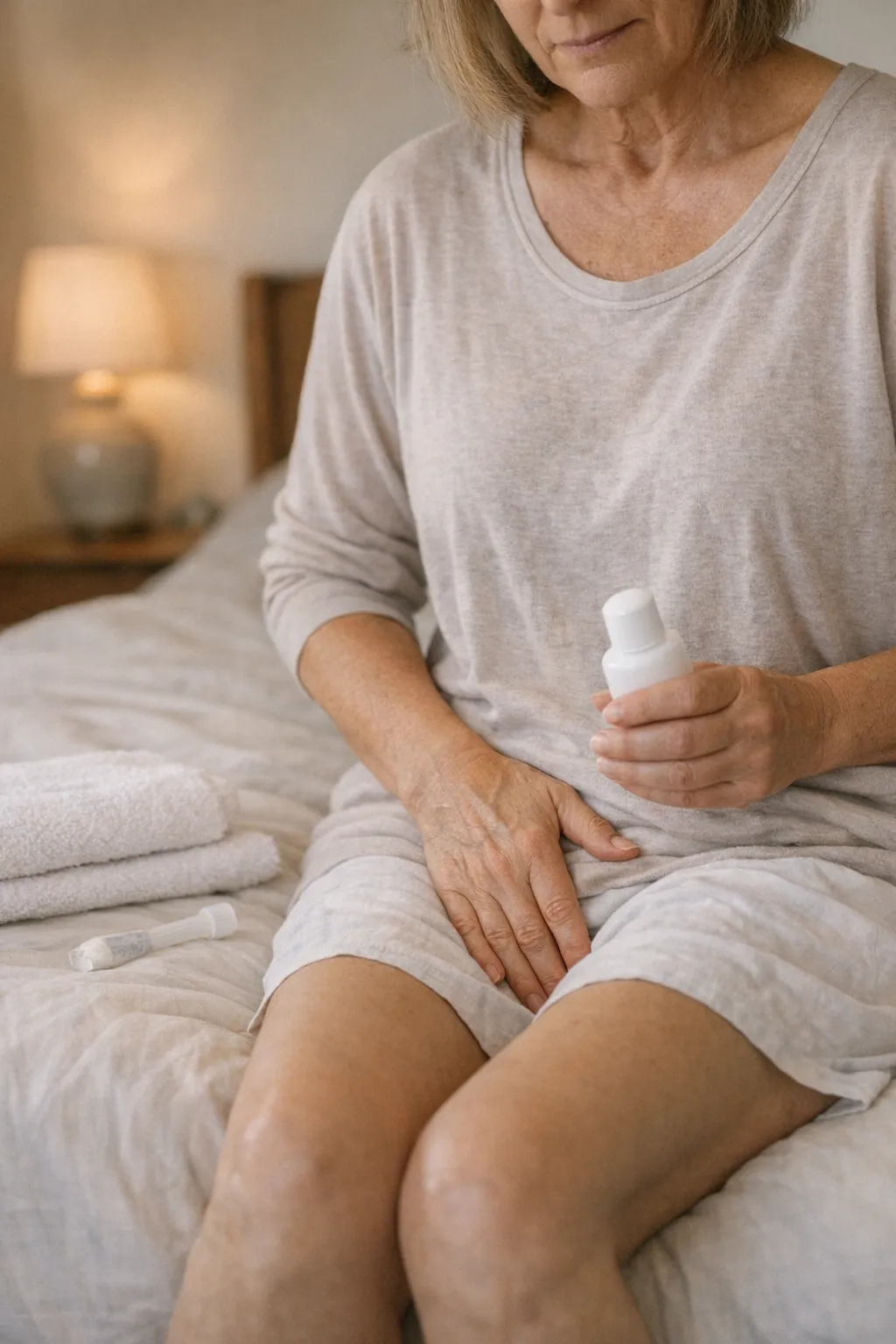
What Vaginal Atrophy After Menopause Actually Feels Like (And What Causes It)
What are the most common symptoms of vaginal atrophy after menopause?
Vaginal dryness during sex is usually the first symptom women notice, but vaginal atrophy after menopause produces a wider range of physical changes that affect daily comfort and urinary health. Burning and itching can occur without any sexual activity at all, and some women experience unusual discharge or light spotting after intercourse. Because these symptoms overlap with those of a yeast infection, many women self-treat incorrectly for months before receiving an accurate diagnosis.
When urinary symptoms accompany vaginal changes, the condition is called genitourinary syndrome of menopause (GSM). Urinary symptoms under this broader definition include frequent urinary tract infections, a sudden urgency to urinate, and stress incontinence. Recognizing the full symptom picture, both vaginal and urinary, helps ensure that nothing is dismissed as unrelated during a clinical visit.
Why does estrogen loss cause these symptoms, and when do they usually start?
Estrogen keeps vaginal tissue thick, elastic, and naturally lubricated, so when levels fall after menopause, tissue gradually becomes thinner, drier, and more prone to irritation and inflammation. The process is slow, which is why many women are caught off guard when symptoms appear. According to the International Journal of Women's Health , atrophic changes are present in only about 4% of women in the early years after menopause, rising to nearly 50% at seven to ten years and 73% to 75% over longer follow-up periods.
Estrogen loss is not limited to natural menopause. Surgical removal of the ovaries, certain breast cancer treatments that suppress estrogen, and even breastfeeding can all lower estrogen enough to trigger the same tissue changes. Women who experience any of these conditions are at risk regardless of their age.
What is the difference between vaginal atrophy and genitourinary syndrome of menopause?
Vaginal atrophy refers specifically to the thinning and drying of the vaginal lining, while genitourinary syndrome of menopause is the broader clinical term that covers changes across vaginal, vulvar, urethral, and bladder tissues caused by the same estrogen decline. The GSM label was introduced because the older term missed the urinary and external vulvar symptoms that frequently accompany vaginal changes. Understanding the distinction matters practically: a woman who reports only bladder urgency may not connect it to menopause unless her provider considers the full GSM picture.
Both terms describe the same underlying cause and the same hormonal mechanism. Providers may use either term in clinical settings, so asking about both vaginal and urinary symptoms during any menopause-related appointment ensures the full scope of the condition is addressed.
What treatment options are available, and how do hormonal and nonhormonal approaches differ?
Low-dose vaginal estrogen is the preferred first-line pharmacologic treatment for localized symptoms because it works directly on vaginal tissue with minimal absorption into the bloodstream. Forms include cream (such as Estrace or Premarin), a dissolvable tablet (Vagifem), and a slow-release ring (Estring). Systemic hormone therapy, delivered orally or transdermally, addresses broader menopausal symptoms including hot flashes but involves higher systemic estrogen exposure and a different risk profile that requires individual evaluation.
Nonhormonal options provide meaningful relief for women who cannot or prefer not to use estrogen. Vaginal lubricants used before intercourse reduce friction and discomfort, while regular vaginal moisturizers such as Replens address ongoing dryness between sexual activity. Ospemifene (Osphena) is an oral non-estrogen pill approved for dyspareunia, though it carries an uncommon but serious risk of blood clots and may increase hot flashes. CO2 laser therapy is noninvasive and has shown benefit in some studies, but it is not FDA-approved for vaginal atrophy due to limited long-term safety data. Anyone considering hormonal or prescription treatment should discuss their full medical history with a clinician, particularly if they are managing cardiovascular, breast, or endometrial health conditions or taking other medications.
Can lifestyle habits actually reduce vaginal atrophy symptoms?
Regular sexual activity is a clinically recognized strategy for managing vaginal atrophy symptoms because it increases blood flow to vaginal tissue, which supports tissue health and flexibility over time. This applies to both partnered and solo sexual activity. For women experiencing painful intercourse, vaginal dilators used under clinical guidance can help gradually restore comfort alongside other treatments.
Avoiding common vaginal irritants is equally important for protecting already-sensitive tissue. Perfumed soaps, scented detergents, dyed products, and certain shampoos can all worsen burning and itching. Combining irritant avoidance with a lubricant and a moisturizer is a practical starting point, and Hello Again's resource on nonhormonal options for menopause outlines additional approaches for women exploring alternatives beyond standard lubricants. Most clinicians recommend trying a combination of strategies rather than relying on any single product or habit.
Key Data and Facts About Vaginal Atrophy After Menopause
- At least 50% of women who enter menopause develop signs and symptoms of genitourinary syndrome of menopause, according to the Cleveland Clinic .
- One in four women with GSM report a negative impact on sleep, sexual health, and general happiness, according to the Cleveland Clinic .
- The European Vulvovaginal Epidemiological Survey detected VVA symptoms in 90% of more than 2,000 postmenopausal women surveyed, as reported in the International Journal of Women's Health in 2018.
- 75% of women with clinical VVA symptoms do not seek medical help, and only 25% receive adequate therapy, according to the International Journal of Women's Health in 2018.
- Atrophic changes are present in approximately 4% of women in the early years after menopause, rising to nearly 50% at seven to ten years and 73% to 75% over longer follow-up, per the International Journal of Women's Health in 2018.
- Local vaginal estrogen therapy eliminates symptoms in approximately 80% to 90% of cases, compared with 75% for systemic hormone therapy, per the International Journal of Women's Health in 2018.
- Vaginal estrogen cream typically requires daily use for several weeks before tapering to two to three times per week, while the vaginal ring delivers a continuous low dose of estrogen over three months, according to the Cleveland Clinic.
- Ospemifene (Osphena) carries a serious but uncommon risk of blood clots and may increase the frequency of hot flashes, according to the Cleveland Clinic.
- CO2 laser treatments are noninvasive but are not FDA-approved for vaginal atrophy due to limited long-term research, according to the Cleveland Clinic.
Frequently Asked Questions
Is vaginal atrophy curable, or is it a permanent condition?
Vaginal atrophy cannot be cured, but symptoms can be effectively managed with appropriate treatment. Because the condition is driven by a permanent shift in estrogen levels after menopause, the underlying tissue change does not reverse on its own. Early treatment is important: starting management before symptoms become severe can prevent further tissue thinning and make treatment more effective over time, according to the Cleveland Clinic.
How can I tell whether I have vaginal atrophy or a yeast infection?
Vaginal atrophy and yeast infections share overlapping symptoms including itching, burning, and unusual discharge, which is why self-diagnosis is unreliable for either condition. A clinician can distinguish between them through a pelvic exam, vaginal pH testing, and infection screening. Treating a yeast infection when vaginal atrophy is the actual cause will not resolve symptoms and may delay effective care.
How long does it take for vaginal atrophy treatments to start working?
Most local estrogen therapies require consistent use over several weeks before noticeable symptom relief occurs, and full benefit may take one to three months depending on the form used. Vaginal estrogen cream is typically applied daily for several weeks before tapering to two to three times per week, while the vaginal ring delivers a continuous low dose over three months. Nonhormonal lubricants and moisturizers provide more immediate but shorter-term relief and do not change the underlying tissue.
Does regular sexual activity genuinely help with vaginal atrophy symptoms?
Regular sexual activity is a clinically recognized strategy for managing vaginal atrophy because it increases blood flow to vaginal tissue, which supports tissue elasticity and natural lubrication over time. This benefit applies to both partnered and solo sexual activity and is recommended alongside other treatments rather than as a replacement for them. For more context on intimacy and vaginal health during menopause, Hello Again's resource on sexuality and vaginal health after menopause covers this topic in practical detail.
What are the risks of taking ospemifene (Osphena) for vaginal atrophy?
Ospemifene, sold as Osphena, is an oral non-estrogen pill approved for painful intercourse caused by vaginal atrophy, but it carries a serious though uncommon risk of blood clots and may increase the frequency of hot flashes. It belongs to a class of drugs called selective estrogen receptor modulators (SERMs), which interact with estrogen receptors throughout the body rather than acting only on vaginal tissue. Women with a personal history of blood clots or cardiovascular concerns should discuss this risk profile carefully with their clinician before starting ospemifene.
Is laser therapy a safe option for treating vaginal atrophy?
CO2 laser therapy is noninvasive and has shown symptom improvement and high patient satisfaction in some clinical studies, but it is not FDA-approved for vaginal atrophy due to limited long-term safety and efficacy data. It is not considered a standard first-line treatment and should be approached as an option when other methods have been insufficient, with a clear understanding of the current evidence gaps. Anyone considering laser therapy should ask their provider directly about the current regulatory status and what the available research does and does not show.