
Vaginal atrophy, also called genitourinary syndrome of menopause (GSM), causes dryness, itching, burning, and painful intercourse when estrogen levels drop during or after menopause. If you want to avoid hormonal therapy, you have several effective non-hormonal options available. The clearest path is to start with a regular vaginal moisturizer used every one to three days for ongoing tissue support, add a vaginal lubricant during intercourse for immediate comfort, and work with your healthcare provider to explore prescription options like ospemifene or a non-hormonal pessary if over-the-counter products are not enough. This guide walks you through each step, explains how to confirm the treatment is working, and helps you troubleshoot if your symptoms do not improve as expected.
This is for you if:
- You are postmenopausal and experiencing vaginal dryness, itching, burning, or pain during intercourse related to GSM or vaginal atrophy.
- You want to avoid estrogen or hormonal treatments due to personal preference, a history of breast cancer, or provider guidance.
- You have tried hormonal options and are looking for alternatives or complementary strategies.
- You are not sure which non-hormonal products or medications are available and want a clear, structured plan to follow.
- You want to understand how to use vaginal moisturizers, lubricants, pessaries, and prescription non-hormonal medications correctly and safely.
- You are ready to work with a healthcare provider to confirm your diagnosis, monitor your progress, and adjust your treatment plan as needed.
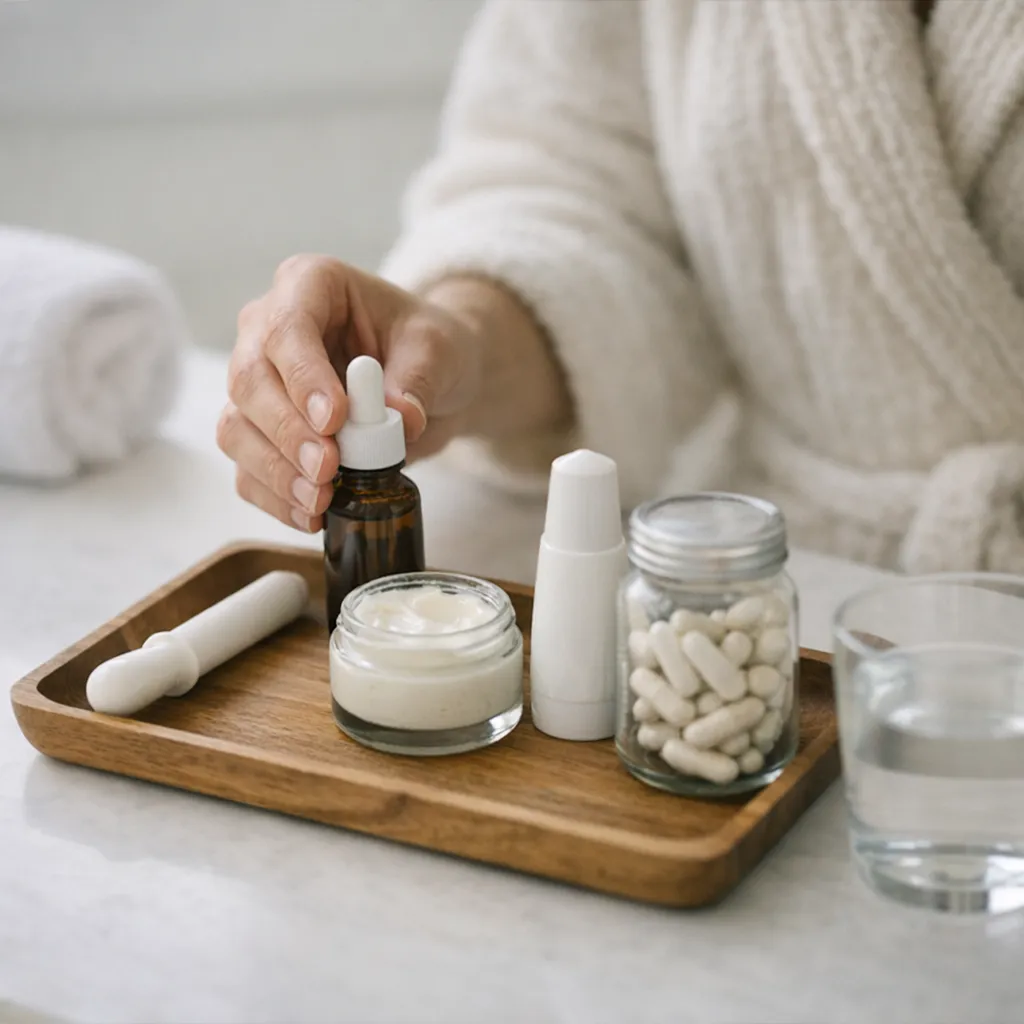
What You Need Before Starting Non-Hormonal Treatment for Vaginal Atrophy
Starting treatment without a clear picture of your symptoms, diagnosis, and available options can lead to weeks of trial and error with products that may not match your needs. Taking a few minutes to confirm you have the right information and resources in place before you begin means your first steps will be more targeted, safer, and more likely to produce real relief in a reasonable timeframe.
Before you start, make sure you have:
- A confirmed or strongly suspected diagnosis of genitourinary syndrome of menopause (GSM) or vaginal atrophy based on your symptoms, such as vaginal dryness, itching, burning, or painful intercourse.
- Access to a healthcare provider, such as a gynecologist or primary care physician, who can perform a pelvic exam and rule out infections, unusual vaginal bleeding, or other conditions that require different treatment.
- An understanding that unusual vaginal bleeding after menopause must be evaluated by a provider before starting any treatment, as it can signal a serious underlying condition.
- A clear reason for avoiding estrogen, whether it is personal preference, a history of breast cancer, provider guidance, or another medical factor, so your provider can tailor recommendations accordingly.
- Knowledge of the non-hormonal treatment categories available, including vaginal moisturizers, vaginal lubricants, non-hormonal pessaries, and prescription options such as ospemifene (Osphena).
- Access to a vaginal moisturizer such as Replens or a comparable product for regular ongoing use every one to three days.
- Access to a vaginal lubricant in a water-based or silicone-based formula for use during intercourse to reduce friction and discomfort.
- Awareness that ospemifene (Osphena) is a prescription-only once-daily oral option with a boxed warning for endometrial cancer risk and cardiovascular disorders, requiring a provider discussion before use.
- If a non-hormonal pessary is being considered, a clear understanding of the dosing schedule, such as once daily for seven days followed by twice weekly for 31 days, and a provider who can guide you through the regimen.
- A list of all current medications and supplements to share with your provider so potential drug interactions can be identified before starting any new treatment.
- Realistic expectations about timelines, since moisturizers and lubricants may take several weeks of consistent use before meaningful symptom improvement is noticeable.
- A willingness to attend follow-up appointments so your provider can assess whether the chosen approach is working and adjust the plan if needed.
- Awareness that vaginal atrophy can be managed but is not typically curable, and that ongoing maintenance is usually part of long-term symptom control.
- A way to track your symptoms over time, such as a simple daily note or a symptom diary, so you can report meaningful changes to your provider at follow-up visits.
How to Treat Vaginal Atrophy Without Estrogen: Step by Step
Working through this process takes commitment across several weeks, not days. The early steps focus on getting an accurate diagnosis and choosing the right products, while the later steps shift toward monitoring progress and refining your plan. Consistency matters more than perfection at any single step. Following the sequence in order reduces the risk of starting a treatment that does not match your actual condition or that conflicts with your medical history.
-
Confirm your GSM diagnosis with a provider and rule out other conditions
Schedule a visit with a gynecologist or primary care provider and describe your symptoms clearly, including dryness, itching, burning, discharge, or pain during intercourse. Your provider will perform a pelvic exam to look for classic signs of vaginal atrophy such as redness, reduced elasticity, and tissue changes. Source Tests to rule out other conditions may include a Pap test, urine sample, vaginal pH assessment, and infection testing. If you have any unusual vaginal bleeding, this must be evaluated and explained before any treatment begins, as bleeding after menopause can signal a serious underlying condition.
How to verify: You leave the appointment with a documented GSM diagnosis and confirmation that infections or other conditions have been addressed.
Common fail: Skipping the pelvic exam and self-diagnosing based on symptoms alone, which can lead to treating the wrong condition.
-
Discuss your non-hormonal treatment preferences openly with your provider
Tell your provider clearly that you want to avoid estrogen and explain your reasons, whether that is personal preference, a history of breast cancer, or another medical factor. Your provider can then match available non-hormonal options to your symptom severity and health history. Be sure to share a complete list of all medications and supplements you currently take so potential interactions can be identified. Source This conversation should result in a written or clearly communicated treatment plan you understand and can follow consistently.
How to verify: You have a clear plan that names specific products or medications, their dosing schedules, and any safety considerations relevant to your history.
Common fail: Leaving the appointment without a concrete plan because the conversation stayed general rather than moving to specific product or medication choices.
-
Begin a regular vaginal moisturizer routine for ongoing tissue support
Choose a non-hormonal vaginal moisturizer such as Replens and apply it every one to three days as directed on the label or by your provider, not only during intercourse. Source Vaginal moisturizers work by adhering to vaginal tissue and maintaining hydration over time, which is different from the immediate and temporary effect of a lubricant. Consistency with the application schedule is what produces cumulative improvement, so treat it as a regular part of your routine rather than an occasional remedy. Check product ingredients and avoid formulas containing potential irritants such as fragrances or harsh preservatives.
How to verify: After two to four weeks of consistent use, you notice a reduction in baseline dryness, irritation, or discomfort during daily activities.
Common fail: Using the moisturizer only when symptoms feel severe rather than on a consistent schedule, which prevents the cumulative benefit from building.
-
Add a vaginal lubricant specifically for use during intercourse
Select a water-based or silicone-based vaginal lubricant and apply it before or during intercourse to reduce friction and improve comfort in the moment. Source Understand clearly that lubricants provide temporary relief only and do not produce any long-term change in vaginal tissue condition. Source They work best as a complement to a moisturizer routine rather than a standalone solution. Oil-based lubricants can degrade certain barrier contraceptives, so factor this in if relevant to your situation.
How to verify: Discomfort during intercourse decreases noticeably with lubricant use, even if baseline dryness between sexual activity still needs further management.
Common fail: Relying on lubricants alone without a moisturizer routine and then concluding that non-hormonal treatment does not work.
-
Ask your provider about ospemifene if over-the-counter options are not providing enough relief
Ospemifene (Osphena) is a once-daily oral prescription medication described as the first and only once-daily non-hormonal treatment for moderate to severe vaginal dryness and painful intercourse due to menopause. It works with estrogen-like effects in vaginal tissue but is not itself a hormone. Before starting, review the boxed warning with your provider, which covers increased risk of endometrial cancer and cardiovascular disorders including stroke and blood clots. Do not use ospemifene if you have a history of unusual vaginal bleeding, certain cancers, blood clots, stroke, heart attack, severe liver problems, or a known allergy to the medication.
How to verify: You and your provider have reviewed the contraindications together, you have no disqualifying factors, and a prescription has been issued with clear dosing and monitoring instructions.
Common fail: Starting ospemifene without fully understanding the boxed warning or without disclosing a relevant medical history that could make it unsafe.
-
Consider a non-hormonal pessary regimen if recommended by your provider
A non-hormonal pessary is an intravaginal option that forms an oil-in-water emollient with vaginal fluid to relieve dryness and related symptoms. Source If your provider recommends this option, the typical regimen involves using the pessary once daily at bedtime for the first seven days, then reducing to twice weekly for the following 31 days. Apply it consistently at bedtime as directed and follow the schedule without skipping doses, since the initial daily phase is designed to build up relief quickly before transitioning to a maintenance frequency. In clinical research, 77.7% of participants reported noticeable relief within 24 hours of first use. Source
How to verify: You are following the prescribed schedule without missed applications and are noticing a reduction in dryness or discomfort within the first week.
Common fail: Switching immediately to twice-weekly use without completing the initial daily phase, which reduces the speed of symptom relief.
-
Complete the full treatment course including any required treatment-free period
If you are using a pessary or another time-limited regimen, complete the entire prescribed course rather than stopping early when symptoms start to improve. After the active treatment phase ends, observe the treatment-free period as directed, typically around six days for a pessary course, to assess whether the benefits persist. Source Research shows that in a pessary trial, 88.2% of participants observed treatment effects lasting three or more days after the last use, suggesting the benefits extend beyond the final application. Source Document how your symptoms feel during this period so you can report accurately at your follow-up visit.
How to verify: You have completed the full active regimen and the treatment-free period, and you have a clear record of how your symptoms changed throughout both phases.
Common fail: Stopping the regimen partway through because symptoms improved, which prevents you from knowing whether the full course would have produced lasting results.
-
Track your symptoms using questionnaires or structured assessments
Use a structured approach to measure your progress rather than relying on general impressions. Tools like the DIVA instrument assess how vaginal atrophy symptoms affect daily life, sexual function, and overall quality of life, and your provider may use this or a similar questionnaire at follow-up visits. Source Keep a simple symptom diary noting dryness, discomfort, and any changes in sexual activity between appointments. Your provider may also track objective measures such as vaginal pH and tissue condition to complement your self-reported symptoms.
How to verify: Your symptom scores or diary entries show a consistent downward trend in severity across the weeks of treatment.
Common fail: Relying only on memory when describing symptoms to your provider, which leads to vague feedback and makes it harder to make informed adjustments to your plan.
-
Report any adverse effects promptly and attend all scheduled follow-up visits
Contact your provider right away if you experience unusual vaginal bleeding, chest or leg pain, sudden severe headache, vision or speech changes, or signs of an allergic reaction to any product. If you are taking ospemifene, these symptoms in particular require immediate medical attention given the cardiovascular warnings associated with the medication. For any prescription medication, adverse effects can also be reported to the FDA MedWatch program at www.fda.gov/medwatch . Do not stop a prescribed treatment without first speaking with your provider, as abrupt discontinuation without a follow-up plan can leave symptoms unmanaged.
How to verify: You have attended your scheduled follow-up, any adverse effects have been reported and addressed, and your provider has confirmed the current plan is safe to continue.
Common fail: Waiting until the next scheduled appointment to mention a concerning symptom rather than contacting the provider promptly when it first appears.
-
Adjust the treatment plan based on follow-up findings and ongoing symptom severity
Use your follow-up visit to review what is working, what is not, and whether your current approach needs to be modified or combined with another strategy. If a single non-hormonal option has not produced enough improvement, your provider may recommend adding another layer to your plan, such as combining a moisturizer with a pessary or exploring ospemifene. Vaginal atrophy cannot typically be cured but can be managed long-term, so think of this step as an ongoing calibration rather than a one-time decision. Source Regular sexual activity, where appropriate, can also support vaginal tissue health by promoting blood flow to the area.
How to verify: You leave the follow-up appointment with an updated, clearly documented plan that reflects your current symptom level and any changes to your treatment strategy.
Common fail: Accepting ongoing inadequate symptom control without discussing further options, under the assumption that non-hormonal treatment has a fixed ceiling of effectiveness.
How to Confirm Your Non-Hormonal Treatment for Vaginal Atrophy Is Working
Confirming that treatment is working requires looking at both how you feel day to day and what your provider measures objectively at follow-up visits. Symptom relief is the most immediate signal, but tissue-level changes such as improved vaginal pH and healthier-looking tissue take longer to appear and are equally important indicators of real progress. Tracking both types of feedback together gives you and your provider the clearest picture of whether the current plan is sufficient or needs adjustment.
- Baseline vaginal dryness, irritation, or burning has decreased noticeably compared to how symptoms felt before treatment began.
- Discomfort or pain during intercourse has reduced with consistent use of a vaginal lubricant alongside your regular moisturizer routine.
- You are applying your vaginal moisturizer on the scheduled frequency, every one to three days, rather than only when symptoms feel severe.
- Your provider confirms objective improvements in vaginal tissue condition and vaginal pH at a follow-up assessment. Source
- Quality of life measures, such as daily activity comfort and sexual function, show improvement compared to your starting point, for example through a structured tool like the DIVA instrument. Source
- If using a non-hormonal pessary, you are noticing continued relief through the maintenance phase of the regimen and into any treatment-free period that follows.
- If using ospemifene, you have experienced no serious adverse events such as unusual vaginal bleeding, leg pain, chest pain, or vision changes, and your provider has confirmed it is safe to continue.
- Your symptom diary or questionnaire scores show a consistent downward trend in severity across the weeks of treatment rather than fluctuating without direction.
- You have attended at least one follow-up visit where your provider reviewed your progress and confirmed the current plan is appropriate to continue.
- No new or worsening symptoms have appeared that would suggest an infection, an adverse reaction, or an unrelated condition requiring separate evaluation.
| Checkpoint | What good looks like | How to test | If it fails, try |
|---|---|---|---|
| After GSM diagnosis is confirmed | Documented diagnosis with infections and unusual bleeding ruled out before any treatment starts | Review provider notes confirming GSM and exclusion of other conditions | Request a pelvic exam and full diagnostic workup including vaginal pH, Pap test, and infection screening |
| Two to four weeks into moisturizer and lubricant use | Noticeable reduction in baseline dryness and improved comfort during intercourse | Compare current symptom diary entries to entries from week one of treatment | Confirm you are applying the moisturizer on schedule every one to three days and not only when symptoms peak, discuss adding a second non-hormonal strategy with your provider |
| End of the active phase of a pessary course | Sustained reduction in dryness and irritation symptoms through the twice-weekly maintenance phase | Note symptom levels at the end of the 31-day maintenance phase and compare to the start of the regimen | Contact your provider to discuss whether repeating the course, adjusting frequency, or adding another option is appropriate |
| During the treatment-free period after a pessary course | Treatment benefits persist for three or more days after the last application Source | Track symptom levels daily during the treatment-free period and record how quickly or slowly dryness returns | Report findings to your provider at the follow-up visit to determine whether a longer or more frequent maintenance regimen is needed |
| After starting ospemifene | Symptom reduction without serious adverse effects such as unusual bleeding, chest pain, or leg pain | Monitor for warning signs daily and assess symptom relief at the first scheduled follow-up visit | Contact your provider immediately if warning signs appear, if there is no benefit after adequate trial, discuss switching or adding a complementary non-hormonal option |
| At follow-up provider assessment | Objective vaginal health measures including tissue condition and vaginal pH show improvement alongside your reported symptom relief Source | Review provider findings from vaginal health index assessment and compare to baseline measurements | If objective measures have not improved, discuss escalating or combining treatment strategies rather than continuing the same approach unchanged |
| Ongoing quality of life assessment | DIVA scores or equivalent quality of life measures show consistent improvement in daily comfort and sexual function Source | Complete the same structured questionnaire used at baseline and compare total scores at each follow-up visit | If scores are not improving, discuss with your provider whether the current plan addresses all contributing symptom types or whether additional strategies are needed |
Troubleshooting When Non-Hormonal Vaginal Atrophy Treatment Is Not Working
Non-hormonal treatments work best when used consistently and matched to the right symptom type, but there are predictable points where progress stalls. Most problems come down to incorrect product use, mismatched expectations, or an unaddressed underlying issue. The entries below cover the most common obstacles and give you a specific action to take rather than a reason to abandon treatment altogether.
-
Symptom:
Vaginal moisturizer is not reducing dryness after several weeks of use.
Why it happens: Moisturizers require consistent application every one to three days to build cumulative benefit. Irregular or infrequent use prevents tissue hydration from reaching a meaningful level, and some products may contain irritants that counteract the intended effect.
Fix: Confirm you are applying the moisturizer on a fixed schedule rather than only when symptoms flare. Check the ingredient list for potential irritants such as fragrances or harsh preservatives and switch to a fragrance-free formula if needed. If consistent use over four or more weeks produces no change, contact your provider to discuss adding a second non-hormonal strategy or reassessing the diagnosis. Source
-
Symptom:
Lubricant provides no meaningful comfort during intercourse.
Why it happens: Lubricants address friction in the moment but do not change the underlying tissue condition. If atrophy is moderate to severe, a lubricant alone is unlikely to provide sufficient relief without a concurrent moisturizer routine or a more targeted treatment addressing tissue health directly.
Fix: Use a lubricant alongside, not instead of, a regular vaginal moisturizer. If dryness and pain during intercourse remain significant despite both products, discuss prescription non-hormonal options such as ospemifene or a non-hormonal pessary with your provider. Source
-
Symptom:
Symptoms return quickly after stopping a pessary course.
Why it happens: A single treatment course addresses symptoms during active use but does not permanently reverse tissue changes caused by low estrogen. Once the course ends, the underlying condition remains and symptoms can re-emerge, particularly if no maintenance strategy is in place.
Fix: Report the speed of symptom return to your provider at your follow-up visit. Discuss whether repeating the course, extending the maintenance frequency, or combining the pessary with a regular moisturizer routine would provide more durable relief between courses. Source
-
Symptom:
Unexpected vaginal bleeding occurs during or after starting a new treatment.
Why it happens: Vaginal bleeding after menopause is not a normal response to non-hormonal treatment. It can signal cancer of the uterine lining or another condition requiring prompt medical evaluation, regardless of which treatment you are using.
Fix: Stop the current treatment and contact your provider immediately. Do not wait for a scheduled appointment. If you are taking ospemifene, this is one of the specific warning signs listed in its prescribing information that requires prompt provider contact. Source
-
Symptom:
Hot flashes or increased sweating begin or worsen after starting ospemifene.
Why it happens: Hot flashes and night sweats are documented common side effects of ospemifene. Because the medication works with estrogen-like effects in certain tissues, it can trigger vasomotor symptoms in some women, particularly in the early weeks of use.
Fix: Track the frequency and severity of hot flashes and report them at your next provider visit. If they are significantly affecting your quality of life, discuss whether the benefit of continued ospemifene use outweighs the side effect burden, and ask about strategies to manage vasomotor symptoms alongside the medication.
-
Symptom:
Vaginal irritation or burning increases after starting a new product.
Why it happens: Some vaginal moisturizers, lubricants, or pessary formulations contain ingredients that irritate already sensitive atrophic tissue. Fragrances, certain preservatives, and glycerin are common culprits.
Fix: Stop using the product that triggered the reaction and review its ingredient list. Switch to a simpler, fragrance-free, and glycerin-free formula. Allow a few days for irritation to settle before reintroducing any product, and inform your provider so the reaction can be documented and alternative products recommended.
-
Symptom:
Urinary symptoms such as frequent infections or incontinence persist alongside vaginal symptoms.
Why it happens: Genitourinary syndrome of menopause affects urinary and vaginal tissue simultaneously, since both are estrogen-sensitive. Non-hormonal vaginal products primarily address vaginal symptoms and may not adequately relieve associated urinary changes. Source
Fix: Raise urinary symptoms explicitly with your provider at your next visit rather than assuming they will resolve with vaginal treatment alone. A separate evaluation of urinary health may be needed, and additional targeted strategies may be appropriate.
-
Symptom:
No improvement after trying multiple non-hormonal options over an adequate timeframe.
Why it happens: Some women with moderate to severe vaginal atrophy do not achieve sufficient relief from over-the-counter non-hormonal products alone. The condition may require a prescription-level intervention, a combination approach, or reassessment to ensure the diagnosis and treatment match the severity of the underlying tissue changes.
Fix: Schedule a provider visit specifically to review the full history of treatments tried and their results. Ask about combining strategies, such as a moisturizer with a pessary, or escalating to ospemifene if not yet tried. Ensure your provider has re-examined vaginal tissue condition objectively, since symptom severity may have progressed since the initial diagnosis. Source
-
Symptom:
Difficulty maintaining the pessary dosing schedule, particularly the initial daily phase.
Why it happens: Transitioning from a daily application to a twice-weekly schedule requires active habit management. Missing applications during the initial seven-day daily phase reduces the speed at which relief builds, since the early phase is designed to establish a baseline level of symptom control before moving to maintenance frequency.
Fix: Set a daily reminder for the first seven days and treat the bedtime application as a fixed part of your evening routine. If you miss a day, do not double up, simply continue from where you left off and note the gap in your symptom diary to discuss with your provider. Source
-
Symptom:
Quality of life and sexual function remain significantly impaired despite symptom reduction in physical dryness.
Why it happens: Vaginal atrophy affects more than tissue condition. Pain, discomfort, and long-standing avoidance of sexual activity can create psychological and relational dimensions to the problem that physical treatment alone does not fully address. Quality of life tools such as the DIVA instrument capture these broader impacts, which may persist even when dryness improves. Source
Fix: Discuss quality of life and sexual function specifically with your provider, not only physical symptom scores. Ask whether a structured quality of life assessment is being used to track this dimension of your progress, and consider whether additional support such as pelvic floor therapy or counseling would complement your current treatment plan.
Questions People Ask Next About Non-Hormonal Vaginal Atrophy Treatment
- How long does it take for a vaginal moisturizer to start working? Most women need two to four weeks of consistent use on a regular schedule before noticing meaningful improvement in baseline dryness and comfort. Using a moisturizer only when symptoms feel severe rather than on a fixed every one to three day schedule significantly slows progress.
- Can I use a vaginal moisturizer and a lubricant at the same time? Yes, and using both together is often more effective than either product alone. The moisturizer supports ongoing tissue hydration between sexual activity, while the lubricant reduces friction and discomfort specifically during intercourse.
- Is ospemifene safe for breast cancer survivors? This requires an individual discussion with your oncologist or gynecologist. There are no broad safety studies supporting the use of topical vaginal estrogen in breast cancer survivors, and ospemifene carries its own boxed warning, so the decision depends heavily on your specific cancer history and treatment. Source
- Will vaginal atrophy get worse if I do not treat it? Without treatment, vaginal atrophy tends to progress over time, potentially leading to more severe narrowing of the vaginal opening, increased pain, and greater urinary symptoms. Unlike some menopausal changes, vaginal atrophy does not improve on its own after menopause. Source
- What is the difference between a vaginal moisturizer and a vaginal lubricant? A vaginal moisturizer is used regularly, every one to three days, to maintain tissue hydration over time and can produce cumulative improvement in tissue condition. A lubricant is used specifically during intercourse to reduce friction in the moment but has no long-term therapeutic effect on the underlying tissue. Source
- Is CO2 laser therapy a reliable non-hormonal option? CO2 laser treatments exist for vaginal tissue renewal but are not currently FDA approved for genitourinary syndrome of menopause, and long-term evidence supporting their safety and effectiveness remains limited. Discuss this with your provider before pursuing it. Source
- Can regular sexual activity actually help with vaginal atrophy symptoms? Yes, regular sexual activity promotes blood flow to vaginal tissue, which can help maintain tissue health and slow the progression of atrophy. This is typically recommended as a supportive measure alongside, not instead of, active non-hormonal treatment. Source
- Do non-hormonal pessaries require a prescription? This depends on the specific product and the country where you live. Some non-hormonal pessaries are available over the counter, while others may require a provider recommendation. Discuss options with your provider to confirm which products are appropriate and accessible for your situation.
- How do I know if my symptoms are GSM or something else? A pelvic exam performed by a healthcare provider is the most reliable way to confirm GSM and rule out infections, unusual bleeding, or other conditions with overlapping symptoms. Do not assume vaginal dryness or discomfort is always GSM without a formal evaluation. Source
- What should I do if non-hormonal treatments stop working over time? Return to your provider and describe exactly which treatments you have used, for how long, and what changed. Combination approaches, adjusted dosing schedules, or a reassessment of symptom severity may open options that were not considered appropriate at an earlier stage of treatment.
Common Questions About Treating Vaginal Atrophy Without Estrogen
Can vaginal atrophy be treated without hormones?
Yes, several non-hormonal options are available and can provide meaningful relief for many women. Vaginal moisturizers used regularly, lubricants for intercourse, non-hormonal pessaries, and the prescription medication ospemifene are all established approaches. The right combination depends on symptom severity and your medical history, so working with a provider to build a structured plan produces better outcomes than trying products without guidance.
How long does it take for non-hormonal treatments to work?
Timelines vary depending on the treatment and symptom severity. Vaginal moisturizers typically require two to four weeks of consistent use before noticeable improvement appears, while a non-hormonal pessary may produce early relief within the first day of use for many women. Ospemifene generally requires several weeks of daily use before its full benefit becomes apparent. Irregular use of any product significantly extends the time to results.
Is ospemifene considered a hormone?
Ospemifene is not a hormone, but it works with estrogen-like effects in certain tissues including the vaginal lining. It is classified as a selective estrogen receptor modulator, which means it behaves differently in different parts of the body rather than acting as a straightforward estrogen replacement. Because it carries a boxed warning for endometrial cancer risk and cardiovascular disorders, it requires a prescription and ongoing provider oversight.
What is the difference between a vaginal moisturizer and a vaginal lubricant?
A vaginal moisturizer is designed for regular ongoing use every one to three days to maintain tissue hydration and support cumulative improvement in tissue condition over time. A vaginal lubricant is applied specifically during intercourse to reduce friction and discomfort in the moment, but it produces no long-term therapeutic change in the underlying tissue. Using both together addresses different aspects of vaginal atrophy more effectively than either product alone.
Are non-hormonal pessaries available over the counter?
Availability depends on the specific product and where you live. Some non-hormonal pessaries can be purchased without a prescription, while others may require a provider recommendation or prescription depending on their formulation and regulatory status in your country. Ask your healthcare provider which options are appropriate for your symptom severity and how to access them, since product availability and quality vary widely.
Is laser therapy a safe non-hormonal option for vaginal atrophy?
CO2 laser treatments are available for vaginal tissue renewal, but they are not currently FDA approved for genitourinary syndrome of menopause, and long-term safety and effectiveness data remain limited. Some providers offer this option, but it should be approached with caution and discussed thoroughly with a qualified clinician before pursuing it. Established non-hormonal options with more available evidence are generally recommended as the starting point.
Can breast cancer survivors safely use non-hormonal vaginal treatments?
Non-hormonal options such as vaginal moisturizers and lubricants are generally considered appropriate for breast cancer survivors and are often recommended as a first line of management precisely because there are no safety studies supporting the use of topical vaginal estrogen in this population. Ospemifene requires a careful individual risk-benefit discussion with an oncologist due to its estrogen-like mechanism, so any prescription non-hormonal option should be reviewed in the context of your specific cancer history.
Will vaginal atrophy get worse without treatment?
Unlike some menopausal changes, vaginal atrophy does not resolve on its own after menopause and tends to worsen over time without active management. Progressive tissue changes can lead to increased pain, further narrowing of the vaginal opening, and worsening urinary symptoms. Starting treatment early and maintaining it consistently gives the best chance of preventing further deterioration and preserving quality of life over the long term.
How do vaginal moisturizers compare to topical estrogen in effectiveness?
Research suggests that vaginal moisturizers may have equivalent efficacy to topical vaginal estrogen for symptom relief in some women, which is why they are recommended as a primary non-hormonal option for those who want to avoid hormones. However, moisturizers do not replicate the tissue-level changes that estrogen produces, so women with more severe atrophy may find the relief less complete. Your provider can help assess whether moisturizers alone are sufficient for your symptom level.
When should I contact my provider during non-hormonal treatment?
Contact your provider promptly if you experience unusual vaginal bleeding, increased vaginal discharge, signs of infection, chest or leg pain, sudden severe headache, or any vision or speech changes, particularly if you are using ospemifene. You should also reach out if symptoms are not improving after several weeks of consistent product use, or if a new treatment causes irritation or worsening discomfort, rather than waiting until a scheduled appointment to raise these concerns.