
In this comparison of vaginal atrophy vs vaginal dryness, vaginal dryness is a symptom that can arise from reduced estrogen during and after menopause. Vaginal atrophy, or genitourinary syndrome of menopause (GSM), describes actual thinning and drying of vaginal tissues and often includes urinary symptoms. The choice of management depends on whether you are addressing a symptom alone or an underlying tissue change with broader vaginal and urinary concerns. For mild dryness without tissue thinning, nonhormonal options such as over-the-counter moisturizers and lubricants are appropriate. If there is visible thinning or recurrent urinary symptoms, topical estrogen therapies (creams, tablets, rings) can improve tissue health with limited systemic exposure, systemic estrogen may be considered if other menopausal symptoms exist. When estrogen is contraindicated, nonhormonal options or non-estrogen strategies like DHEA or Ospemifene can be discussed. Laser therapy or other advanced options exist but require safety considerations. Care should be tailored to symptom scope, safety factors, and patient preference.
TLDR:
- Vaginal dryness is a symptom, vaginal atrophy (GSM) describes tissue changes often with urinary symptoms.
- Management differs: nonhormonal moisturizers/lubricants vs hormonal tissue-restoration therapies.
- Local estrogen exposure vs systemic, plus nonhormonal alternatives for those with contraindications.
- Urinary symptoms guide GSM-focused approaches and may impact therapy choice.
- For mild symptoms, OTC options may suffice, for tissue thinning, therapy with tissue restoration is recommended.

Vaginal atrophy vs vaginal dryness: a practical comparison for choosing care
This table contrasts vaginal dryness as a symptom with vaginal atrophy (GSM) as tissue change, highlighting who each option is best for, their strengths, and tradeoffs. It focuses on evidence-based distinctions, such as when local versus systemic estrogen is appropriate, and how nonhormonal options fit milder cases or contraindications. The aim is to help readers select treatments aligned with symptom scope, safety considerations, and personal preferences while noting pricing status.
| Option | Best for | Main strength | Main tradeoff | Pricing |
|---|---|---|---|---|
| Vaginal dryness (symptom) | Best for: quick, nonhormonal relief with OTC options for mild symptoms | Nonhormonal accessibility and simplicity | Does not address tissue thinning or urinary symptoms | Not stated |
| Vaginal atrophy (GSM) | Best for: tissue changes with thinning and dryness that may include urinary symptoms | Tissue restoration and symptom improvement | Potential estrogen exposure or contraindications depending on therapy | Not stated |
| Genitourinary syndrome of menopause (GSM) | Best for: broader syndrome management including vaginal and urinary symptoms | Comprehensive symptom coverage | Requires therapy selection and possible clinician oversight | Not stated |
| Topical vaginal estrogen therapy (cream, ring, tablet) | Best for: local estrogen delivery with minimal systemic exposure | Targeted tissue treatment with low systemic absorption | Some estrogen exposure, not suitable for all contexts | Not stated |
| Systemic hormone therapy (estrogen) | Best for: broader menopausal symptom relief when systemic exposure is appropriate | Wide symptom coverage including hot flashes and vaginal health | Systemic exposure and contraindications, clot risk possible | Not stated |
| DHEA therapy | Best for: non-estrogen hormonal option for GSM with a different safety profile | Alternative hormonal pathway without estrogen | Different safety profile, evidence base may be less robust than estrogen options | Not stated |
| Nonhormonal lubricants and moisturizers | Best for: safe, accessible relief without estrogen exposure, mild symptoms | OTC availability and minimal risk | May not address underlying tissue changes or urinary symptoms | Not stated |
| Ospemifene (Osphena) | Best for: oral non-estrogen option when estrogen is not preferred or contraindicated | Estrogen-like benefits without direct estrogen exposure | Clotting risk and potential hot flashes | Not stated |
| Laser therapy (CO2 laser) | Best for: non-pharmacologic option when hormones are contraindicated or undesired | Non-pharmacologic approach | Limited long-term evidence, not FDA-approved for GSM in some contexts | Not stated |
How to read this table:
- Symptom scope addressed: does the option target dryness only or include tissue changes and urinary symptoms?
- Hormonal vs non-hormonal: how the therapy interacts with estrogen exposure and safety
- Administration/availability: how the therapy is used and how easy it is to obtain
- Onset and durability: how quickly relief occurs and how long it lasts
- Safety and monitoring: potential risks and the need for clinician oversight
- Limitations: known gaps in evidence or regulatory status affecting use
- Cost indication: pricing clarity where stated or not stated
Option-by-option comparison: vaginal atrophy vs vaginal dryness
Vaginal dryness (symptom)
Best for: Quick relief of dryness in mild cases using nonhormonal options.
What it does well:
- Accessible over the counter moisturizers and lubricants.
- Low risk with minimal systemic exposure.
- Flexible use aligned to sexual activity or daily routine.
- Often provides immediate lubrication during intercourse.
Watch-outs:
- Does not address vaginal tissue thinning or urinary symptoms.
- May require repeated or ongoing use for ongoing relief.
- Effectiveness varies by product and individual sensitivity.
Notable features: This is a symptom-driven approach, symptoms may improve with nonhormonal products, but underlying tissue changes may persist.
Setup or workflow notes: Start with an assessment of symptom severity, trial an OTC moisturizer or water-based lubricant, monitor response for several weeks and escalate if symptoms persist or worsen.
Vaginal atrophy (thinning/drying of vaginal walls)
Best for: Tissue restoration when thinning and inflammation are present, often with urinary symptoms.
What it does well:
- Addresses structural changes in vaginal tissue.
- Can improve elasticity, thickness, and moisture of the vaginal walls.
- Helps reduce dyspareunia and dryness related to tissue thinning.
- May alleviate some urinary symptoms associated with GSM.
Watch-outs:
- Often involves hormonal therapies with local or systemic estrogen exposure.
- Not suitable for individuals with contraindications to estrogen or certain medical histories.
Notable features: Recognizes GSM as a broader condition, therapy choices are guided by tissue health and safety considerations rather than symptoms alone.
Setup or workflow notes: Requires clinician guidance to choose among topical estrogen, DHEA, or alternative options, administration may involve creams, tablets, or rings with varying dosing schedules.
Genitourinary syndrome of menopause (GSM)
Best for: Broader management that includes vaginal dryness and urinary symptoms.
What it does well:
- Addresses both vaginal and urinary aspects of estrogen decline.
- Open to multiple therapeutic paths, from nonhormonal to hormonal options.
- Offers a framework for evaluating urinary health alongside vaginal symptoms.
Watch-outs:
- Therapy choices depend on estrogen exposure and medical history.
- Some treatments require clinician oversight and monitoring.
Notable features: GSM is the umbrella term that reflects the full spectrum of menopausal changes affecting both vaginal tissue and urinary function.
Setup or workflow notes: Initial assessment should cover both vaginal and urinary symptoms, select a treatment plan that aligns with safety goals and patient preferences, with follow-up to gauge response.
Topical vaginal estrogen therapy (cream, ring, tablet)
Best for: Local estrogen delivery with minimal systemic exposure to treat vaginal tissue changes.
What it does well:
- Targets vaginal tissue directly to improve thickness and moisture.
- Low systemic absorption compared with systemic therapy.
- Available in multiple delivery formats for personalized use.
Watch-outs:
- Still involves estrogen exposure, suitability depends on cancer history and risk factors.
- Requires prescription or clinician guidance for some forms.
Notable features: Provides a localized approach that may minimize systemic risks while addressing tissue health concerns.
Setup or workflow notes: Discuss suitability with a clinician, choose a product form (cream, tablet, or ring) and follow dosing guidelines for maintenance after initial use.
Systemic hormone therapy (estrogen)
Best for: Broader menopausal symptom relief when systemic exposure is appropriate.
What it does well:
- Addresses hot flashes and vaginal health together.
- Can improve overall mucosal and tissue health in multiple sites.
- Offers a comprehensive approach when vaginal symptoms co-occur with other menopausal symptoms.
Watch-outs:
- Involves systemic estrogen exposure with associated contraindications and monitoring.
- Not suitable for all medical histories or risk profiles (e.g., clot risk, cancer history).
Notable features: Provides a wide scope of relief but requires careful patient selection and ongoing safety assessments.
Setup or workflow notes: Requires clinician prescription, initiate with risk assessment and periodic follow-up to evaluate benefits and risks over time.
DHEA therapy
Best for: Non-estrogen hormonal option for GSM with a distinct safety profile.
What it does well:
- Offers an alternative hormonal pathway without direct estrogen exposure.
- May provide tissue-support benefits in GSM contexts where estrogen is less desirable.
Watch-outs:
- Evidence base may be less robust than estrogen-based options.
- Regulatory and safety considerations should be reviewed with a clinician.
Notable features: Represents a non-estrogen route, emphasizing individualized risk assessment and monitoring.
Setup or workflow notes: Use under medical supervision with clear dosing and monitoring plans, assess response and adjust as needed.
Nonhormonal lubricants and moisturizers
Best for: Safe, accessible relief without estrogen exposure, suitable for mild symptoms.
What it does well:
- Over-the-counter availability with diverse formulas.
- Lubricants reduce friction during intercourse, moisturizers improve ambient moisture over time.
- Low systemic risk and easy to trial.
Watch-outs:
- May not address deeper tissue thinning or urinary symptoms.
- Effectiveness depends on product choice and user tolerance.
Notable features: Serves as first-line management for many patients seeking nonhormonal options and daily comfort improvements.
Setup or workflow notes: Choose water- or silicone-based formulas based on sensitivity and compatibility with sex products, monitor for irritation or inadequate relief and escalate if needed.
Ospemifene (Osphena)
Best for: Oral non-estrogen option when estrogen is not preferred or contraindicated.
What it does well:
- Provides estrogen-like benefits without direct estrogen exposure.
- Convenient daily oral dosing.
Watch-outs:
- Clotting risk and potential hot flashes require caution and clinician guidance.
- Not suitable for all patients, depending on medical history.
Notable features: Adds a non-estrogen pharmacologic option within GSM management, with attention to cardiovascular and vasomotor side effects.
Setup or workflow notes: Use under medical supervision, discuss risk factors and monitor for adverse events during use.
Laser therapy (CO2 laser)
Best for: Non-pharmacologic option when hormones are contraindicated or undesired.
What it does well:
- Non-drug approach aimed at improving vaginal tissue quality.
- Potentially suitable for patients seeking nonhormonal strategies.
Watch-outs:
- Limited long-term evidence and regulatory considerations in some contexts.
- Not universally available and may require specialist providers.
Notable features: Represents a technological option outside pharmacology, with variable evidence and regulatory status depending on locale.
Setup or workflow notes: Consultation with a qualified provider is essential to discuss risks, benefits, and appropriate eligibility.
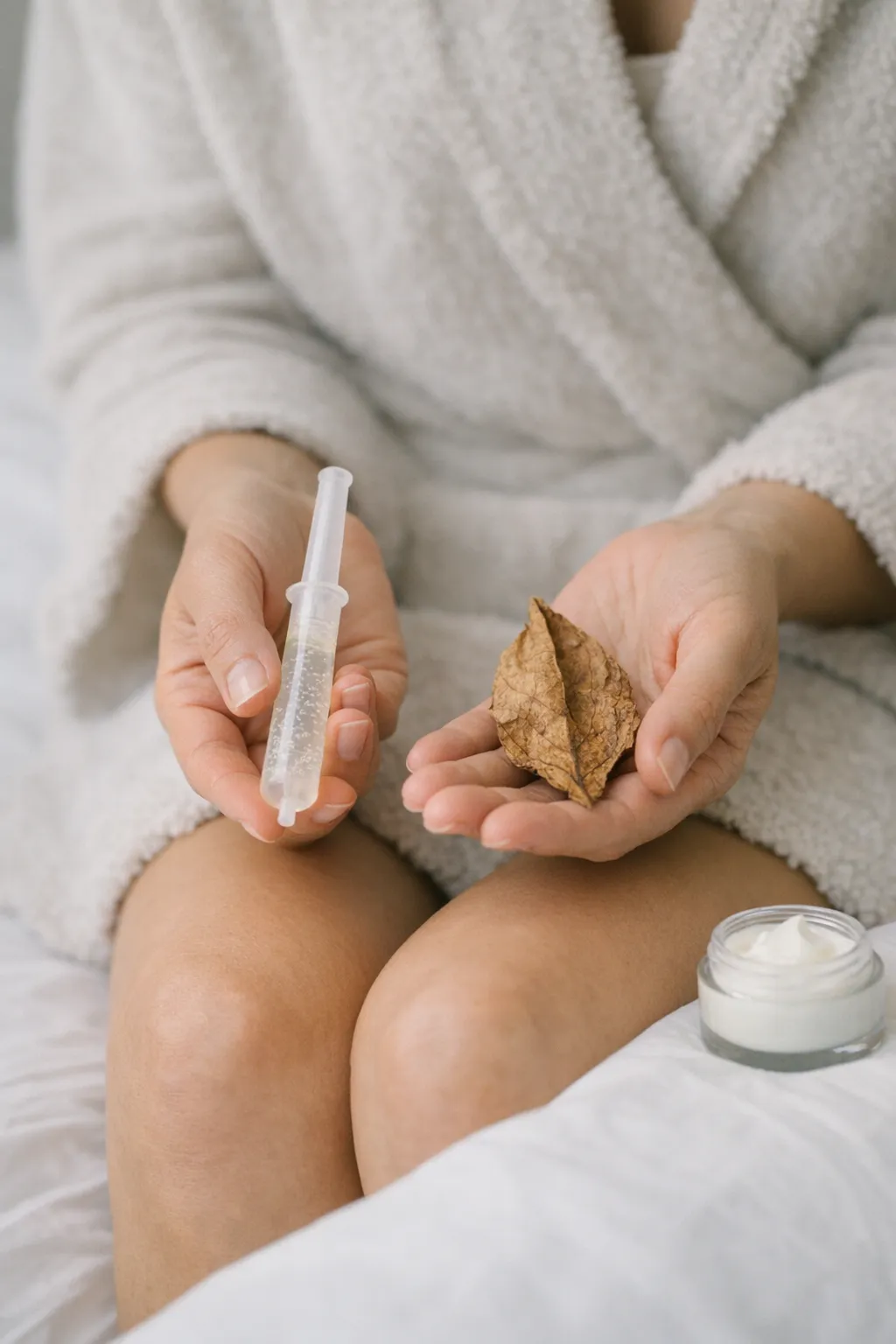
Decision guidance: choosing between vaginal atrophy and vaginal dryness
Choosing between vaginal dryness as a symptom and vaginal atrophy (GSM) as a tissue-change condition rests on two core factors: the scope of symptoms and safety considerations around estrogen exposure. If symptoms are mild and limited to dryness during intercourse, nonhormonal moisturizers or lubricants are appropriate first-line options. If thinning of vaginal tissue or urinary symptoms are present, targeted tissue-restoration approaches such as topical estrogen or alternatives may be needed. Patient values, cancer history, and lactation status shape the safest and most effective path.
How to decide: Align treatment with whether you are addressing a symptom (dryness) or a broader tissue-change syndrome (GSM), while weighing estrogen exposure risks and the presence of urinary symptoms.
Use-case decision map
- If vaginal dryness is the sole issue and tissue thinning is not evident, choose nonhormonal lubricants/moisturizers because they are safe and accessible.
- If dryness persists or there is environmental irritation but no thinning, choose nonhormonal options first, with consideration of moisturizers for ambient moisture.
- If thinning of vaginal walls is evident or urinary symptoms are present, choose topical vaginal estrogen therapy for localized tissue restoration with limited systemic exposure.
- If menopausal symptoms (hot flashes) accompany vaginal symptoms, choose systemic hormone therapy after risk assessment.
- If estrogen exposure is contraindicated (cancer history, lactation), choose nonhormonal options or non-estrogen therapies like DHEA or Ospemifene with clinician guidance.
- If urinary symptoms dominate, choose GSM-focused options that address both vaginal and urinary health, guided by safety context.
- If a nonpharmacologic approach is preferred and hormones are undesired, consider laser therapy with caution due to mixed evidence and regulatory status.
- If a patient wants a simple, local approach with minimal systemic exposure, choose topical estrogen therapy rather than systemic therapy when appropriate.
- If rapid relief is essential and tissue health is a concern, prioritize therapies with evidence for tissue restoration while monitoring safety.
People usually ask next
- What is the difference between vaginal dryness and GSM? Vaginal dryness is a symptom, GSM describes broader tissue changes and urinary symptoms related to estrogen loss.
- Is GSM the same as vaginal atrophy? GSM is the broader term that includes vaginal atrophy, some sources use them interchangeably, but GSM emphasizes urinary involvement.
- What are the main treatment options for vaginal atrophy? Topical estrogen therapies, systemic estrogen, DHEA, nonhormonal lubricants/moisturizers, Ospemifene, and, in some contexts, laser therapy.
- What is the safety profile of topical estrogen? Local delivery minimizes systemic exposure, but suitability depends on individual risk factors and medical history.
- Can laser therapy be used for GSM? It is available as a nonpharmacologic option in some settings, but long-term evidence and regulatory status vary.
- How long does it take to see relief? Time to relief varies by therapy and symptom severity, nonhormonal options may offer quicker relief for dryness, while tissue-restorative therapies may require weeks.
Practical FAQs: distinguishing vaginal atrophy from vaginal dryness
What is the difference between vaginal dryness and GSM?
Best for: Vaginal dryness is a symptom that often occurs with lower estrogen during and after menopause. GSM, or genitourinary syndrome of menopause, is a broader condition that describes thinning and drying of vaginal tissue and often includes urinary symptoms. Distinguishing these matters because dryness can respond to lubricants, while GSM may require tissue restoring therapies, with safety considerations based on cancer history and estrogen exposure.
Is GSM the same as vaginal atrophy?
Best for: GSM is the umbrella term that replaces vaginal atrophy to reflect the broader set of symptoms that can accompany estrogen loss, especially urinary symptoms. Vaginal atrophy describes thinning tissue, while GSM emphasizes the full syndrome. In many sources the terms are used interchangeably, but GSM has a wider scope for treatment decisions.
What are the main treatment options for vaginal atrophy?
Best for: The main options include topical vaginal estrogen therapies such as cream, ring, or tablet, and systemic estrogen therapy. DHEA is another hormonal option. Nonhormonal lubricants or moisturizers, Ospemifene, and laser therapy are additional choices depending on safety, symptom scope, and patient preference. Selection depends on safety factors, symptom scope, and whether urinary symptoms are present.
What is the safety profile of topical estrogen?
Best for: Topical estrogen delivers estrogen locally to vaginal tissue with limited systemic absorption, offering a favorable safety profile for many patients. It can still have contraindications based on cancer history or risk factors, and some people may experience local irritation. A clinician should assess personal risk, monitor response, and discuss duration of use and maintenance.
Can laser therapy be used for GSM?
Best for: Laser therapy is a non pharmacologic option for GSM when hormones are contraindicated or undesired. Evidence on long term safety and effectiveness varies by study, and regulatory status differs by region. Availability depends on providers and locale, and patients should discuss risks, benefits, and alternatives with a clinician before pursuing treatment.
How do nonhormonal options compare to hormonal options?
Best for: Nonhormonal options like lubricants and moisturizers address moisture and comfort but do not reverse tissue thinning. Hormonal options, including topical estrogen or systemic therapy, aim to restore tissue health and sometimes reduce urinary symptoms. Safety considerations differ: hormones carry estrogen exposure risks, while nonhormonal approaches generally have lower systemic risk but may be less effective for tissue changes.
When should I consider systemic hormone therapy?
Best for: Systemic hormone therapy may be considered when other menopausal symptoms are present and vaginal symptoms persist despite local treatments. It provides broader symptom relief but involves systemic estrogen exposure and potential contraindications. Decision depends on age, time since menopause, cancer risk, and personal preferences, with careful clinician guidance and regular monitoring.
How long does it take to see relief?
Best for: Time to relief varies by therapy and symptom severity. Nonhormonal products may offer quicker lubrication during intercourse, while tissue restoring therapies like topical estrogen or DHEA typically require weeks to show noticeable improvements. Consistent use, follow up with a clinician, and sometimes combination therapy help optimize results. Individual response depends on baseline tissue health, adherence, and safety considerations.